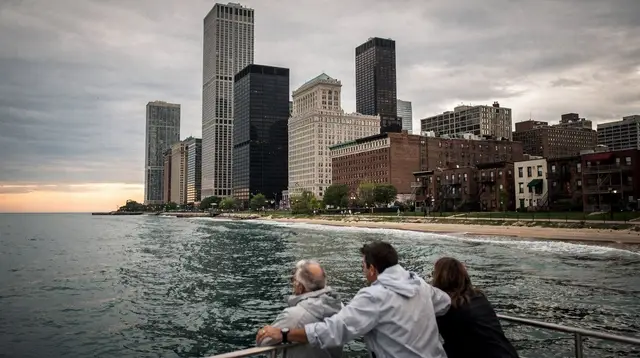
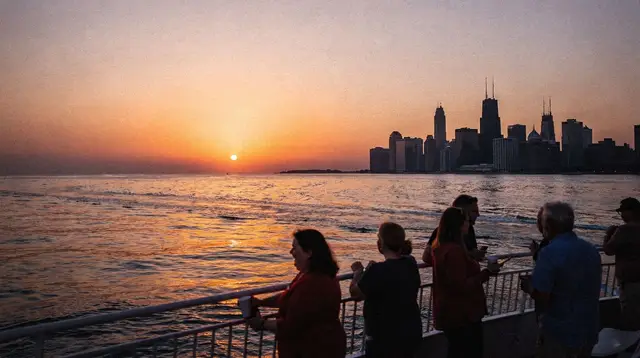
Small-group architecture cruises in Chicago
What is a small-group architecture cruise in Chicago?
It is a Chicago River architecture cruise run on a smaller boat with a limited passenger count, usually 30 to 80 people instead of the 200-plus capacity of the large sightseeing boats. Fewer passengers means better acoustics for the guide's commentary, faster boarding, and more chances to ask questions directly. It is not the same as a fully private charter.
What “small group” actually means on the water
Chicago sells its architecture river cruise in several formats, and the marketing language around them is not always precise. The standard cruise, the one most visitors book without thinking twice, runs on a large vessel that can carry 200 or more passengers at once. It is efficient, it is affordable, and for many first-time visitors it is the right call — our architecture river cruise guide covers that format in full.
A small-group cruise is a different product built around one variable: passenger count. Instead of 200-plus people spread across two or three decks, a small-group boat typically caps around 30 to 80 passengers. That single change affects almost everything else about the experience — how well you can hear the guide, how long you wait to board, how close you can get to the rail for photos, and whether you can actually ask a question and get an answer.
It is worth being precise about what small group does not mean. It is not a private charter. You are still buying an individual ticket alongside other travelers, and the boat still runs on a public schedule. For the fully privatized version of this experience, where you charter the entire boat for your own group, see private architecture cruise — a separate product with its own booking process and a different price structure that we will not attempt to pin down here, since it depends heavily on group size, season, and operator.
The concrete advantages, without the sales pitch
Acoustics
On a 200-passenger boat, the guide typically works through a public-address system, sometimes competing with wind off the lake, engine noise, and the general chatter of a full deck. On a smaller boat, many guides can be heard without amplification, or with a lighter system that sounds less like an airport announcement. If you have ever come off a large architecture cruise feeling like you caught half the commentary, this is the format that fixes that specific problem.
Boarding and logistics
Loading and unloading 200 people through a single gangway takes time, and on a tight schedule that time comes out of your cruise, not into it. Small-group departures board faster, which matters most if you are stacking a cruise into a short trip alongside a stop at Willis Tower or a walk down the Riverwalk the same afternoon.
Access to the guide
This is the feature most repeat visitors mention. On a small boat, guides tend to take questions as they go, or open the floor after the scripted portion. That back-and-forth, asking why a particular building’s setback exists, or what happened to a facade after a renovation, is close to impossible on a large boat where the guide is speaking into a one-way microphone to a packed deck.
Room to move for photos
Rail space is finite. On a full 200-passenger boat during a busy summer weekend, getting a clean shot of the skyline as you pass under a bridge can mean elbowing for position. Fewer passengers means more realistic odds of an unobstructed view when the boat passes the classic stretch near the Magnificent Mile bridge.
Sometimes, food and drink
Some small-group and semi-private operators build in a light snack, a drink, or a beverage package as part of the ticket or as a paid add-on. This is operator-specific and not guaranteed across every small-group departure, so check the listing before you assume it is included. If what you actually want is a cruise built around dinner or drinks rather than architecture narration, that is a distinct product — see our guide to the lake Michigan dinner cruise, which is not the subject of this page.
What does not change
A smaller boat does not usually mean a shorter or different route. Most small-group cruises still trace the same core loop through the river’s main branch, past the cluster of landmark towers in the Loop, and out toward the river mouth near Navy Pier before turning back. If your priority is seeing a specific building or hearing about a specific architect, ask the operator directly whether their small-group route matches the standard route, since some outfits vary slightly.
Price is the other thing that does not shrink with the boat. Operating a smaller vessel per seat costs more, so small-group and semi-private tickets generally run higher than the mass-market standard cruise. We are not going to hand you a fixed number here, since prices move by season, time of day, and operator, and quoting a stale figure does more harm than good. Check the current price directly on the booking page before you commit.
Comparing the three formats side by side
| Format | Typical capacity | Guide access | Best for |
|---|---|---|---|
| Standard architecture cruise | 200+ passengers | PA system, limited Q&A | First-time visitors, budget-conscious travelers |
| Small-group / semi-private cruise | Roughly 30 to 80 passengers | Often unamplified, real-time questions | Repeat visitors, architecture enthusiasts, photographers |
| Fully private cruise | Your group only | Guide dedicated to your party | Special occasions, large families, corporate groups |
For a deeper side-by-side of specific operators running these formats, see architecture cruise companies compared.
What you actually see from the water
The route matters as much as the boat size, since it is the same core stretch regardless of which format you book. Expect the guide to point out the cluster of towers around the Loop, the low bridges you pass under one after another, and the newer glass-and-steel buildings mixed in with early-20th-century masonry closer to the river mouth. Chicago’s reputation as the birthplace of the modern skyscraper is not marketing filler — it traces back to the rebuilding boom after the 1871 fire, and most river cruise commentary, small-group or standard, spends real time on that history rather than just naming buildings as the boat passes them.
Two Chicago landmarks get confused constantly, and it is worth being precise here since a small-group cruise guide will likely mention both. The Skydeck, with its glass Ledge balconies, is inside the Willis Tower at 233 South Wacker Drive. Separately, 360 Chicago and its tilting TILT attraction occupy the building at 875 North Michigan Avenue, formerly known as the John Hancock Center. These are two different towers in two different parts of downtown, not two names for the same place — our Skydeck versus 360 Chicago comparison untangles the two if you are trying to decide which to add to your itinerary.
The river cruise itself does not go anywhere near Lake Michigan unless you book the combined lake-and-river version. Worth remembering: Lake Michigan is a freshwater lake, not an ocean, even though the open-water stretch on the combined route can look and feel like one from the deck of a boat.
Weather and when to book
Chicago’s river cruise season runs through the milder months, and the small-group format is exposed to the same seasonal swings as every outdoor boat tour in the city. Winters here are genuinely cold and windy, with daytime temperatures often hovering around freezing, which is why most operators pause or sharply reduce small-group departures in the coldest stretch of the year. Summer runs warm and humid, with daytime highs commonly in the mid-to-high 20s Celsius, and that is also when demand for the smaller, more comfortable boats peaks — book further ahead for a June-through-August evening slot than you would for a shoulder-season weekday.
Many repeat visitors and architecture enthusiasts, the core audience for this format, actually prefer spring or fall, when the light is softer for photos and the boats are less crowded; our best time to visit Chicago guide breaks down the seasonal trade-offs in more detail, and Chicago’s summer lakefront guide covers what else is worth combining with a warm-weather cruise along the lakefront.
Accessibility on small-group boats
Boat access varies more by vessel than by ticket category, so a small-group departure is not automatically easier or harder to board than a standard one. If mobility is a concern, contact the operator directly before booking to confirm gangway type, seating, and restroom access on the specific boat used for that departure, since fleets are mixed even within one operator. Our dedicated accessible architecture river cruise guide goes through what to ask and what has worked for other travelers, and the broader wheelchair-accessible Chicago tours guide covers accessibility across other tour formats in the city if the cruise turns out not to be the right fit.
Who this format actually suits
If this is your first trip to Chicago and you mainly want to check the architecture cruise box, the standard cruise covered in our main architecture river cruise guide will do the job for less money, and the commentary is the same script whether you can hear every word perfectly or not.
The small-group format earns its premium for a narrower audience: people who have already done the standard cruise once and want to actually engage with a guide this time, architecture buffs who want to interrupt with a specific question about a specific facade, photographers who need clean sightlines, and travelers on a tighter timeline who value fast boarding over a rock-bottom price. If none of that describes your trip, save the difference and book standard.
Timing and booking notes
Departures run throughout the day, with sunset and evening slots typically the first to sell out, especially in summer. A by-night river and lake cruise covers the after-dark version of this experience in more depth, including how the skyline lighting changes the commentary. Booking a few days ahead is reasonable for a weekday daytime slot; weekend evenings in June through August benefit from booking further out.
Most departures leave from docks along the Riverwalk in the Loop, the same general stretch used by the standard cruises, though the exact pier varies by operator. Your confirmation email will list the specific dock — read it rather than assuming, since two operators docked 200 meters (roughly 650 feet) apart is a common source of missed departures.
If you are trying to decide between this format and a straight walking tour of the same buildings from land, our architecture cruise versus walking tour guide lays out that trade-off directly, including what you gain and lose by staying on the water.
Pairing the cruise with the rest of your day
A small-group cruise typically runs well under two hours, which leaves room to build the rest of a Loop day around it without overloading the schedule. Many travelers pair a morning or midday departure with a walk down Michigan Avenue and the Magnificent Mile, or a self-guided Loop walking tour that covers some of the same buildings from street level for comparison. If you also want the elevated view, the Willis Tower Skydeck and the 360 Chicago and TILT observation deck both work as a same-day add-on, though as noted above they are two separate buildings, so plan the walk or transit time between them rather than assuming they are next door to each other.
Millennium Park and the Cloud Gate sculpture, free to visit and within easy walking distance of most Riverwalk docks, are a common stop either before or after a cruise. The Art Institute of Chicago, by contrast, charges admission and rewards a longer visit, so it fits better as its own half-day than as a quick add-on around a cruise departure. For a full day-by-day structure that slots a cruise in alongside these other stops, see our three-day Chicago itinerary or the shorter two-day Chicago highlights plan.
Booking a small-group or semi-private departure
a 75-minute guided river cruise with live narration is the closest match to the classic small-group format described above, running the core Loop-to-river-mouth route with a live guide.
For travelers who want the river and a stretch of open lake in one outing, a 1.5-hour combined lake and river cruise extends the route past the river mouth into Lake Michigan before turning back.
If you would rather do the cruise after dark, when the skyline is lit and the crowds thin out, an evening river and lake cruise covers that slot; see the night-cruise guide linked above for what changes after sunset.
Travelers who want a broader skyline view from the water without the full architecture narration format can look at a lake Michigan shoreline skyline cruise instead, which runs a different route focused on the lakefront rather than the river.
Frequently asked questions about small-group architecture cruises
How is a small-group cruise different from the standard architecture river cruise?
The standard cruise, covered in our architecture river cruise guide, runs on large vessels with high passenger counts, multiple gangways, and a fixed public-address commentary. A small-group cruise caps the headcount, so the guide’s voice carries better without a heavy PA system, and there is more room to move around for photos.
Is a small-group cruise the same as a private cruise?
No. A small-group cruise still sells individual tickets to the public, so you share the boat with other travelers, just fewer of them. A fully private cruise charters the whole boat for one group and is priced and booked differently.
Does a smaller boat mean a shorter route or fewer landmarks?
Not necessarily. Most small-group cruises follow the same core stretch of the Chicago River through the Loop and past the Magnificent Mile bridge as the large boats. The difference is capacity and comfort on board, not the itinerary.
Do small-group cruises cost more than the standard river cruise?
Generally yes, because operating cost per seat is higher on a smaller boat. Expect to pay a premium over the large-boat standard cruise. Check the current price on the operator’s page before booking, since it varies by boat, season, and time of day.
Can I ask the guide questions during the cruise?
That is one of the main draws. On a small-group boat, guides typically take questions during or after the scripted commentary, something that is difficult on a 200-passenger boat with a one-way PA system.
Is food or drink served on board?
Some small-group and semi-private operators offer light refreshments or a drink package as an add-on; this varies by operator and is not standard on every departure. If the cruise centers on food and drink rather than architecture commentary, that is a different product covered in our lake Michigan dinner cruise guide.
Where do small-group architecture cruises depart from?
Most depart from docks along the Chicago Riverwalk in the Loop, the same general area used by the large sightseeing boats. Check your specific booking confirmation for the exact dock, since operators use different piers along the river.
Chicago River architecture and sightseeing cruises on GetYourGuide
Verified deep-linked GetYourGuide tours. Book through these links and we earn a small commission at no cost to you.
GetYourGuide does not provide a product photo for this activity — the image shows the meeting point, photographed by us.