Chicago's summer lakefront: beaches, kayaks, and cruises
When is Chicago's lakefront best for swimming and water activities?
Chicago's municipal beaches are staffed and open for swimming from late May to early September only. Kayaking, paddleboarding, and most boat cruises on the Chicago River and Lake Michigan run at full schedule through the same window, tapering off in September.
Why summer changes everything on the lakefront
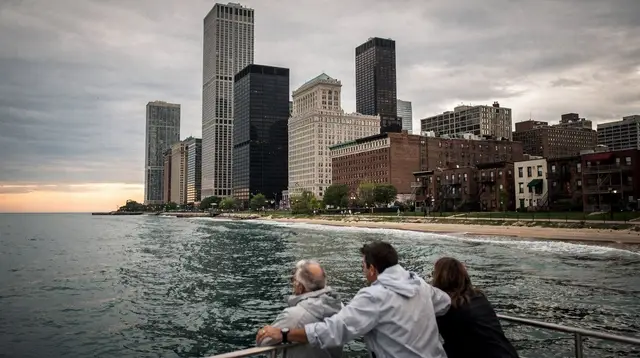
Chicago sits on the southwest shore of Lake Michigan, and for most of the year the lake is mainly a backdrop: a view from the Skydeck, a cold wind off the water in winter, a line of container ships and sailboats on the horizon. Summer is when the lakefront switches from scenery to destination. It’s the only stretch of the year when the city’s beaches are staffed and open for swimming, when kayak and paddleboard operators run full schedules on the Chicago River and the lake itself, and when evening cruises stretch late thanks to long daylight hours. If you’re building a Chicago trip around the water, June through August (with the shoulder weeks of late May and early September) is the window that matters.
This guide covers the seasonal logic of the lakefront in summer: what opens, what gets busier, what to actually plan for, and where to go for the details on specific activities. For the opposite season, see Winter activities in Chicago: what actually works in the cold, which covers what the lakefront looks like once the beaches close and the cold sets in.
The swim season, and why the dates matter
Lake Michigan is a freshwater lake, not an ocean, but it’s large enough to behave like one: real waves, real currents, and water that can turn cold fast when the wind shifts. The Chicago Park District staffs its municipal beaches with lifeguards only from late May to early September. Outside that window, the beaches themselves may still be physically open, but there’s no supervision, and swimming isn’t advisable.
This is the single most important planning fact in this guide, because it’s also the most commonly ignored: travelers who show up in April or October expecting a beach day are disappointed, and travelers who assume the lake is warm because the air is hot in July are sometimes surprised by cold water, since lake temperature and air temperature don’t move together. Check conditions on the day rather than assuming.
Within the swim season itself, early June and late August tend to have thinner crowds than the peak of July, though this guide won’t put a number on attendance it can’t verify. If you want a quieter beach visit, aim for a weekday morning rather than a summer weekend afternoon.
What’s at its peak: kayaking, paddleboarding, cruises
Summer is when the lakefront’s water-based activities run at full capacity. Three in particular are worth planning around, and each has its own detailed guide rather than being covered in depth here:
- Kayaking on the Chicago River runs through the Loop and past the city’s skyline, and is one of the more distinctive ways to see the Willis Tower and the Riverwalk from water level. Full detail, operators, and timing: Kayaking the Chicago River: a paddler’s guide to the skyline.
- Stand-up paddleboarding on Lake Michigan is a calmer, slower alternative to kayaking, typically launched from lakefront access points rather than the river itself. See Stand-up paddleboarding on Lake Michigan: a practical guide for where to start and what to expect.
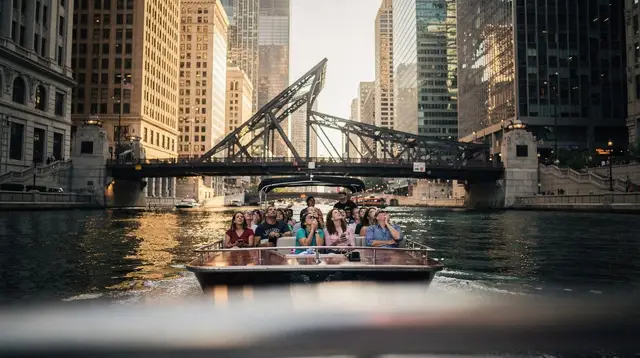
- Sunset cruises on Lake Michigan take advantage of the long summer evenings, with boats heading out onto open water as the skyline catches the last light. Details on timing, boarding points, and what differs from a river cruise: Lake Michigan sunset cruise guide.
Rather than duplicate that material here, the point of this guide is the bigger picture: these three activities cluster in the same three-month window, operators scale up their schedules to match, and booking ahead in peak July and August weeks is worth doing rather than assuming a same-day slot will be available.
a sunset cruise on Lake Michigan is a good anchor for an evening once the day’s heat has broken, and it pairs naturally with an earlier afternoon spent along the shore.
Jet skis and sailing: the higher-energy end of the lake
Kayaking and paddleboarding aren’t the only way onto the water. For a faster pace, a jet ski rental on Lake Michigan covers more of the shoreline in less time and gives a different perspective on the skyline than a paddle-powered outing. At the other end of the pace spectrum, a private sailing charter on Lake Michigan trades speed for a quieter, wind-powered afternoon or evening on the water, and can work as a smaller-group alternative to a larger sightseeing cruise. Both options run on the same summer schedule as the rest of the lakefront’s water activities, so weekday bookings tend to be easier to secure than weekend afternoons in July and August. For a full comparison of jet skis against other fast-paced options on the water, see Jet ski and speedboat rides on Lake Michigan: what to expect.
Getting to the lakefront without a car
Most of the lakefront is easier to reach by transit or bike than by driving and parking, especially in summer when beach parking lots fill early. The CTA’s “L” system, run on a Ventra card, gets close to most lakefront access points; only the Red Line and the Blue Line run 24 hours, so plan around that if you’re heading back from an evening cruise or a late sunset paddle. Divvy, the city’s bike-share system, has stations along much of the Lakefront Trail and is a practical way to cover ground between the Museum Campus, Navy Pier, and the North Side beaches without waiting on a bus. For the fuller picture of getting around without renting a car, see Getting around Chicago without a car and, for the L system specifically, The CTA ‘L’ train: a visitor’s guide.
The Lakefront Trail in summer
The Lakefront Trail runs roughly 30 km along the lake, connecting the North Side beaches through the Museum Campus and down toward the South Side. It’s used year-round by runners and commuters, but summer is when it’s busiest: more walkers, more cyclists, more people simply out enjoying the water. That’s not a reason to avoid it, but it does mean allowing extra time if you’re trying to cover distance on foot or by bike, particularly on the segment near Navy Pier and the Museum Campus, where beachgoers and museum visitors overlap.
If you want to cover more of the trail than you can walk comfortably, a guided or self-guided bike tour along the Lakefront Trail covers more ground in less time and is one of the more efficient ways to see both the skyline and the shoreline in a single outing.
A practical day on the lakefront
There’s no single “right” order, but a workable summer lakefront day looks something like this:
| Time | Activity | Notes |
|---|---|---|
| Morning | Beach time or a walk on the Lakefront Trail | Cooler, less crowded than afternoon |
| Midday | Museum Campus (Field Museum, Shedd Aquarium, or Adler Planetarium) | Air-conditioned break from the heat; each museum is a separate paid ticket |
| Afternoon | Kayaking or paddleboarding | See the dedicated guides above for operators and timing |
| Evening | Sunset cruise on Lake Michigan | Long summer daylight means later departures still catch good light |
This isn’t a fixed itinerary, just a pattern that respects both the heat of a Chicago summer afternoon (typically in the range of 25 to 28°C, per NOAA normals for the area) and the fact that most water activities are more pleasant earlier or later in the day than at full midday sun.
What summer costs on the lakefront
The beaches themselves, the Lakefront Trail, and Millennium Park are free. Paid lakefront activities follow the same rule as the rest of Chicago: prices are quoted before sales tax, and Chicago’s sales tax is among the higher rates in major U.S. cities, so budget a bit more than the sticker price. Kayak and paddleboard rentals are typically priced per hour or per session; sunset cruises are priced per ticket and vary by boat and by whether food or drink is included. Exact figures change by operator and by season, so check current pricing on the specific activity guides linked above rather than treating any number here as fixed.
What to skip if you’re short on time
If you only have one afternoon on the water, don’t try to fit in kayaking, paddleboarding, and a cruise in the same visit. Each takes a real block of time once you account for check-in, safety briefings, and transit to and from the launch point. Pick one water activity and pair it with beach time or a Lakefront Trail walk rather than rushing between three bookings.
Families with young children are often better served by a beach afternoon and a paddleboard rental than a longer boat cruise, since younger kids may not sit still for a full sightseeing cruise. If a cruise is the priority, a shorter daytime sightseeing option may suit families better than a longer sunset sailing; see Lake Michigan sightseeing cruise: the daytime skyline option for daytime alternatives to the sunset option covered above.
Combining the lakefront with the rest of downtown
The lakefront isn’t isolated from the rest of Chicago’s summer sightseeing. The Museum Campus sits directly on the shore, so a museum visit and a beach stop can be the same outing. The Riverwalk, while technically on the Chicago River rather than the lake itself, connects to lakefront paths near Navy Pier and is worth combining with a river-based activity like a The Chicago Riverwalk: a guide to the walk itself walk. And if you’re staying downtown, the Willis Tower’s Skydeck or the 360 Chicago observation deck both offer a bird’s-eye view of the same shoreline you’ll be walking or paddling at ground level; see Skydeck at Willis Tower: the complete guide and 360 Chicago and TILT: the observation deck on Michigan Avenue for the two (distinct) options.
Navy Pier itself is free to enter, with its rides, boat docks, and restaurants charged separately, and it sits close enough to the Lakefront Trail and the Streeterville stretch of the shoreline that it’s easy to fold into a summer lakefront day without a special detour. Millennium Park, with the Cloud Gate sculpture (better known locally as “the Bean”), is another free downtown stop that pairs naturally with a lakefront morning, since it’s a short walk from both the Loop and the northern end of the Museum Campus.
For a broader sense of how a lakefront-focused day fits into a longer visit, the Summer lakefront weekend: beaches, kayaking and biking itinerary lays out a multi-day version of the pattern described here. If you’re weighing whether summer or another season suits your trip better, Best time to visit Chicago compares the lakefront’s summer peak against the quieter shoulder seasons.
Frequently asked questions about Chicago’s summer lakefront
Can you swim in Lake Michigan in Chicago?
Yes, Lake Michigan is a freshwater lake, not the ocean, and Chicago’s municipal beaches are open with lifeguards from late May to early September. Outside that window, swimming is not supervised and is not recommended.
Is the Lakefront Trail busier in summer?
Yes. Summer is Chicago’s peak season for walking, running, and biking along the Lakefront Trail, which runs roughly 30 km along the lake. Expect more foot and bike traffic near the beaches and the Museum Campus than at other times of year, without a precise crowd count to rely on.
What’s the water temperature like in Lake Michigan in summer?
It varies by month and by wind, since lake water can be noticeably colder than the air temperature even in July and August. Check the current conditions before swimming rather than assuming the lake matches the day’s heat.
Do I need to book kayak or paddleboard tours in advance in summer?
Booking ahead is a good idea in peak summer months, since operators on the Chicago River and Lake Michigan run at capacity when the weather cooperates. See the dedicated kayaking and paddleboard guides for operator details and timing.
Are lake cruises only a summer activity in Chicago?
Architecture and sightseeing cruises run for most of the year when the river isn’t frozen over, but the full range of options, including sunset cruises and evening sailings, is at its peak in summer when daylight lasts longest.
Is Chicago’s lakefront free to enjoy?
The beaches, the Lakefront Trail, and Millennium Park are free. Kayak rentals, paddleboard rentals, jet skis, and most boat cruises are paid activities, and prices are typically quoted before sales tax.
What should I bring to the lakefront in summer?
Sun protection, water, and a way to store valuables if you’re swimming or paddling, since Chicago summer days can run warm and humid. A change of clothes is useful if you’re combining beach time with sightseeing downtown.
Do I need a car to enjoy the lakefront in summer?
No. The Lakefront Trail, the beaches, Navy Pier, and Millennium Park are all reachable by the CTA’s “L” trains, buses, or Divvy bike-share, and driving often adds the extra step of finding lakefront parking during the busiest summer weeks. A Ventra card covers trains and buses across the system.
Seasonal tours and activities on GetYourGuide
Verified deep-linked GetYourGuide tours. Book through these links and we earn a small commission at no cost to you.
GetYourGuide does not provide a product photo for this activity — the image shows the meeting point, photographed by us.