The Chicago Riverwalk: a guide to the walk itself
What is the Chicago Riverwalk and is it free to walk?
The Riverwalk is a paved public promenade along the south bank of the Chicago River through the Loop, free to walk at any reasonable hour with no ticket required. It's also the main departure point for the city's architecture river cruises and guided kayak trips, which are booked and paid for separately.
What the Riverwalk actually is
The Chicago Riverwalk is a paved public walkway along the south bank of the Chicago River, running through the Loop at a level below the street, tucked beneath the bridges that carry Wacker Drive and the Loop’s cross streets over the water. It’s easy to confuse with the activities that use it — the architecture cruises, the kayak tours, the sunset photo sessions — but the Riverwalk itself is none of those things. It’s the ground they all stand on: a free public space you can walk, sit in, or eat beside without booking anything at all.
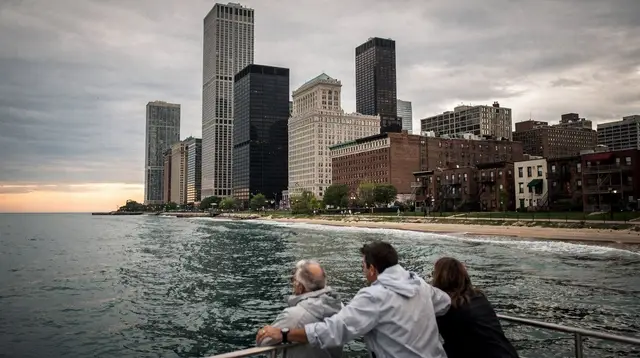
That distinction matters when you’re planning a trip, because most guides to Chicago jump straight to “book the architecture cruise” without explaining where that cruise leaves from, what’s around the dock, or whether the walk itself is worth doing on its own. It is. Even a visitor with zero interest in boarding a boat can spend a pleasant hour down here, at water level, with the Loop’s skyscrapers rising on one side and the river traffic moving past on the other.
Geographically, the Chicago River here is the river’s main stem, the short east-west stretch that splits the city’s north and south branches and empties into Lake Michigan a few blocks east. The Riverwalk follows this stem from roughly the lakefront near Lake Shore Drive on the east end, west past the Michigan Avenue bridge, through the heart of the Loop, and on toward the western edge of downtown near Lake Street. It sits below Wacker Drive’s upper roadway, so you’re walking in the shade of the street above for long stretches, with the water a few steps to your right.
Sections you’ll actually walk through
The Riverwalk isn’t one uniform strip; it changes character as you move west to east, and knowing this ahead of time helps you decide where to linger and where to just pass through.
Near the eastern end, close to where the river meets the lake, the walkway opens into wider plazas with more seating and a clearer view down the water toward the skyline. This stretch tends to be where sightseeing and dinner cruises dock, since it gives boats a straight run out toward the lake and back.
Moving west under the Michigan Avenue bridge, the Riverwalk narrows and runs directly beneath the Magnificent Mile’s northern approach, with the bridge itself framing views of the river in both directions — one of the more photographed vantage points on the whole walk, and a spot several riverside photo sessions use deliberately.
Through the central Loop section, the walkway threads beneath a run of consecutive bridges, each one dropping the light and changing the acoustics for a few seconds before you emerge back into open air. This is also where most of the architecture river cruise docks cluster, since it puts boats within a short walk of both Michigan Avenue hotels and Loop office towers.
Toward the western stretch, closer to Lake Street, the Riverwalk gets quieter and less built up, with fewer restaurants and more straightforward walking. It’s a reasonable place to finish a walk if you’re heading toward the West Loop and Fulton Market afterward, rather than backtracking east.
Each of these stretches sits directly below a different slice of downtown Chicago, which is part of why the Riverwalk works so well as a connector rather than a destination in its own right: duck down near the lakefront end and you’re steps from the Museum Campus approach; surface near the center and you’re back in the heart of the Loop; climb out near Lake Street and you’re on the doorstep of the West Loop’s restaurant scene. Few other walkways in the city let you sample that much of downtown’s character in a single unbroken pass at water level.
Getting there without a car
The Riverwalk sits in the Loop, which means it’s one of the easiest downtown Chicago spots to reach without a car. The CTA “L” — Chicago’s elevated and subway rapid transit system — serves the Loop directly, and a Ventra card covers fares on both the L and CTA buses. If you’re arriving from O’Hare, the Blue Line runs into the Loop in roughly 40 to 45 minutes; from Midway, the Orange Line takes about 25 to 30 minutes. Only the Red Line and Blue Line run around the clock — every other line, including the Orange Line from Midway, stops overnight, which matters if you’re planning a very early or very late Riverwalk visit tied to a flight. Suburban visitors can also reach downtown on Metra commuter rail, though service thins out noticeably on weekends. For a fuller rundown of the transit options and how they connect to the rest of downtown, see getting around Chicago without a car.
Walking it for free
There’s no ticket, gate, or fixed hour for using the Riverwalk. It’s a public walkway maintained by the city, and it’s reasonable to treat it the way you would any downtown park path: usable during daylight and early evening without any formal restriction, though like any outdoor public space its comfort and lighting fall off after dark, so it’s not the place to linger alone late at night. Rather than quote official opening hours that change or don’t strictly exist for an open-air path, treat “reasonable daylight and evening hours” as the practical rule and use your own judgment after dusk.
A full one-way walk, without lingering, takes roughly 45 minutes to an hour depending on pace and how many bridges you stop under to look up at. Most visitors don’t walk it end to end in one go — they use it as a route between two other things, say from a Loop walking tour to a spot on Michigan Avenue, and dip in and out of it for a stretch of ten or fifteen minutes at a time.
One honest caveat: the Riverwalk gets genuinely crowded on summer weekends, particularly the sections near the docks and restaurants, and photos that look empty in marketing images rarely look that way in person between June and August. Weekday mornings and shoulder-season visits are noticeably calmer.
Eating and drinking by the water
Several restaurants and bars sit directly on the Riverwalk, mostly clustered in the central and eastern sections, with outdoor seating that puts you a few feet from the water. These range from casual counter-service spots to full sit-down restaurants, and none of them require any kind of reservation to simply walk up and look at a menu, though the more popular ones fill up fast at lunch on warm days.
This is also one of the more pleasant places in downtown Chicago to eat something ordinary — a sandwich, a coffee, a beer — and watch boat traffic go by rather than treating the meal as a destination in itself. If you’re looking for a curated food experience with more structure, that’s better served by a dedicated food tour elsewhere in the Loop or West Loop rather than the Riverwalk’s more casual, walk-up options.
The departure point for boats and kayaks
Here’s the part that trips up a lot of first-time planners: most of the site’s architecture river cruises, sunset boat tours, and guided kayak trips don’t happen “on the Riverwalk” in the sense of touring the walkway — they use docks built into it as their launch points. The walkway and the boats are physically connected but functionally separate products, and this page deliberately doesn’t try to cover what happens once you’re on the water.
If a guided, narrated boat tour past the Loop’s skyscrapers is what you’re after, that’s covered in full in the architecture river cruise guide, including how the docks are arranged, what commentary style to expect, and how it differs from simply riding a route without narration.
a 75-minute guided architecture cruise departing from the Riverwalk docks is the most common way visitors experience the river itself rather than just the walkway beside it, and it’s worth booking ahead in peak summer months when dock time slots fill up.
If paddling rather than riding is more your speed, the kayaking guide covers guided kayak tours that also launch from Riverwalk-adjacent docks, including what a first-timer should expect from paddling in an active urban waterway shared with tour boats and water taxis. A guided kayak tour that mixes river history with a paddle past the Loop’s towers is a genuinely different way to see the same skyline the cruises show you, just from water level in a much smaller boat.
For a shorter, self-contained cruise option that still covers the core stretch of skyline, a shorter architecture boat tour along the main stem of the river is worth comparing against the 75-minute version if your schedule is tight.
And if what you actually want is a portrait session rather than a boat ride or a paddle, the Riverwalk couples photoshoot guide covers the professional photography sessions that use the walkway’s bridges and water views as a backdrop — again, a distinct product from the cruises, booked separately and run by different operators.
Why the skyline looks the way it does from here
Part of what makes a slow walk along the river worthwhile, even without booking a cruise, is the density of landmark architecture rising directly above it. Much of that skyline exists because of a disaster: the Great Chicago Fire of 1871 leveled a huge swath of the city, including most of what’s now the Loop, and the rebuilding that followed is where the skyscraper as a building type was effectively born.
The architects who shaped that rebuilding and the decades after it — Louis Sullivan, Daniel Burnham, and later Mies van der Rohe — are collectively known as the Chicago School, and their influence is still visible in the massing and detailing of towers you pass while walking the river. If that history is what draws you to the water in the first place, an icons-of-Chicago-architecture guided walking tour covers the same buildings from street level, with a guide narrating the Sullivan-Burnham-Mies lineage in person rather than leaving you to piece it together from a plaque — a useful complement to a river cruise rather than a replacement for one.
Visiting across the seasons
The Riverwalk changes a lot depending on when you visit, and it’s worth setting expectations by season rather than assuming it looks the same year-round. Summer is peak season by a wide margin: daytime temperatures typically sit in the mid-70s to low-80s Fahrenheit (roughly 25 to 28°C), the restaurants along the water run at full capacity, and the crowds noted earlier are at their thickest on weekends. Winter is the opposite extreme — daytime highs hover around freezing (roughly 0°C) with a wind that the river corridor tends to funnel and intensify, so the walkway empties out and few of the seasonal riverside vendors stay open.
Spring arrives later in Chicago than visitors from milder climates expect, and fall is, by a lot of local accounts, the most comfortable and least crowded stretch to walk the Riverwalk — cooler air, thinner crowds, and skyline light that photographs well in the shorter days. None of this is a hard rule, just a general pattern worth planning around if crowd levels or comfort matter more to you than a specific date on a calendar.
What the Riverwalk is not
It’s worth being blunt about a few things the Riverwalk doesn’t offer, since some visitors arrive expecting otherwise. It’s not a swimming spot: the Chicago River is not treated as safe or legal for swimming anywhere along this stretch, unlike the Lake Michigan municipal beaches, which are lifeguarded only from late May to early September. It’s not an amusement or attraction with an entry fee — there’s no Riverwalk ticket to buy, only the separate activities that happen to launch from it. And it’s not the same experience as the elevated Lakefront Trail along the lake itself, which is a longer, more bike-oriented path roughly 30 kilometers in length running along the shoreline rather than the river.
It’s also worth remembering that the Riverwalk sits well below Michigan Avenue street level, so if you’re navigating from a hotel on the Magnificent Mile or from a Loop hotel, you’ll usually need to find a staircase down to river level — it’s not always obvious from the sidewalk above that the walkway is even there.
Comparing the ways to use it
| How you use it | Cost | Best for |
|---|---|---|
| Just walking the Riverwalk | Free | First orientation to the Loop’s riverfront, photos, a break between other activities |
| Eating or drinking at a riverside spot | Meal price, no separate fee | A relaxed lunch or evening drink at water level |
| Guided architecture river cruise | Paid ticket, booked ahead | Narrated history and architecture of the skyline from the water |
| Guided kayak tour | Paid ticket, booked ahead | An active, closer-to-the-water view of the same skyline |
| Riverwalk photoshoot session | Paid session | Professional portraits with the bridges and skyline as backdrop |
Planning your visit
The Riverwalk works well as a connector rather than a single destination: start a Loop walking tour or a visit to the Willis Tower area, drop down to river level for a stretch of the Riverwalk, grab something to eat by the water, then either walk back up into the Loop or head toward Michigan Avenue. If you’re building a broader plan, the three-day Chicago itinerary guide slots a Riverwalk stretch in alongside the architecture cruise and the Loop’s other sights, and getting around Chicago without a car explains how to reach the Riverwalk on the L or on foot from most downtown hotels.
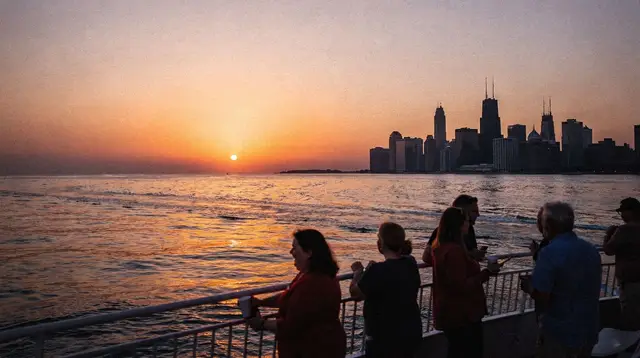
For sunset specifically, the light along the river through the Loop’s bridges is one of the more reliable photo windows in the city, and it’s covered in more depth in the best sunset views guide, alongside the separate guided sunset cocktail cruise along the river for visitors who’d rather watch the light change from a boat with a drink in hand than from the walkway itself.
If your main interest is architecture rather than the river specifically, an above-water guided walking tour of the Loop’s landmark buildings pairs naturally with a Riverwalk stretch, since many of the buildings the walking tour points out are the same ones visible from the water below.
Whichever way you use it, treat the Riverwalk itself as free, flexible, and worth a slow pass on foot — the paid activities are optional add-ons to a public space that costs nothing to enjoy on its own.
Chicago River architecture and sightseeing cruises on GetYourGuide
Verified deep-linked GetYourGuide tours. Book through these links and we earn a small commission at no cost to you.
GetYourGuide does not provide a product photo for this activity — the image shows the meeting point, photographed by us.