Kayaking the Chicago River: a paddler's guide to the skyline
Is kayaking on the Chicago River worth it?
Yes, if you want an active, low-to-the-water view of the Loop's skyscrapers instead of a seated cruise. Most visitors join a guided group paddle with an instructor; experienced kayakers can rent and paddle a set stretch on their own. Check current pricing and schedules directly with the operator.
A different way to see the skyline
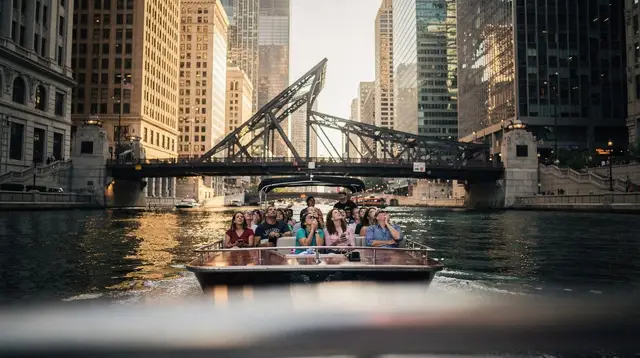
Most visitors experience the Chicago River from a seat on a tour boat, looking up at the skyscrapers while a guide narrates the history of each one. Kayaking puts you in the same water, at a much lower vantage point, moving under your own power. It’s a genuinely different experience, not just a cheaper or scrappier version of the architecture river cruise: you’re closer to the water, closer to the bridges, and setting your own pace rather than following a boat’s schedule.
This is a page for people who are comfortable with light physical activity and want that active, on-the-water version of a Chicago sightseeing trip, whether solo, as a couple, or in a small group. It’s not a page about which company to book or exactly what a sunset paddle looks like — those live in two more specific guides linked below. This one covers the basics: what kayaking the river actually involves, the two formats you’ll choose between, where you’ll paddle, what to bring, and the safety points worth knowing before you go.
Guided tour or self-guided rental
There are two fundamentally different ways to kayak the Chicago River, and picking the right one matters more than picking the right company.
A guided group tour puts you on the water with an instructor and a small group, typically after a basic on-land or dockside briefing on paddling technique and river etiquette. The guide sets the route, manages the group’s pace, and handles navigation around other river traffic. This is the format most first-time paddlers choose, and it’s the more social option if you’re traveling solo and want company on the water.
A self-guided rental hands you a kayak and turns you loose on a set stretch of river, with no instructor and no group. This suits paddlers who already know what they’re doing and want to move at their own speed, stop where they like, and skip the group briefing. It assumes real prior kayaking experience: reading current, steering around wake from other boats, and staying aware of a working urban waterway with tour boats and water taxis sharing the same channel.
We deliberately don’t get into pricing or exact durations here, since both shift by operator and season — check current details directly when you book. For a fuller side-by-side on which format actually suits your trip, see our dedicated guide, guided vs. self-guided kayak tours on the Chicago River.
a beginner-friendly guided paddle from the Riverwalk with instruction included is the simplest way to try the river if you’ve never kayaked before. If you already paddle regularly and just want access to a kayak, a downtown kayak rental with no guide attached is the more independent option.
What you’ll paddle past
Guided routes generally run through the heart of downtown, along the same stretch of river the architecture cruises use, which means the same landmark buildings: the cluster of skyscrapers around the Loop, the bridges that lift for boat traffic, and the modern towers lining the Chicago Riverwalk itself. Because you’re paddling rather than riding, you can slow down at a bridge, drift for a photo, or angle yourself for a better sightline in a way a scheduled tour boat can’t.
The river here is a working waterway, not a park lagoon. Expect wake from architecture tour boats and water taxis, other kayakers and paddleboarders, and the general noise and activity of a downtown American city built right up to the water’s edge. That’s part of the appeal for an active traveler, but it’s also why the guided-versus-self-guided choice matters: a first-time paddler managing that traffic alone is a different proposition than one following an instructor.
Timing your paddle
Kayak tours run at different times of day, and the time you pick changes the experience more than it might for a seated cruise, since you’re at water level rather than an elevated deck. A daytime paddle gives you clear views of the buildings and glass facades; an evening or sunset departure trades some of that clarity for changing light on the skyline as the sun goes down and the city starts to light up. If a sunset paddle is what you’re after, our dedicated page, the sunset kayak tour on the Chicago River, covers what that specific format adds and what to expect from it — we don’t duplicate that detail here.
a guided evening paddle timed to sunset on the river is the most popular version of this if you want the golden-hour skyline rather than a midday view. There’s also a slightly later guided twilight paddle for a darker, more lit-up version of the same idea.
The best season to paddle
Chicago’s paddling season follows the city’s own weather more than any fixed calendar. Spring arrives late and takes its time warming up, so the river doesn’t really settle into comfortable paddling conditions until early summer. Summer itself runs hot and humid, with daytime highs commonly in the mid-70s to low-80s Fahrenheit (roughly 25 to 28°C), and that’s when most operators run their full schedule of guided tours and rentals. Many visitors and locals consider fall the most pleasant season in Chicago overall, and a paddle on a clear early-autumn afternoon, before the wind properly turns cold, can mean fewer crowds on the water without giving up much comfort.
Winter is a different story entirely: Chicago winters are cold and windy, with daytime highs hovering around freezing, and kayak operators on the river do not run through that stretch of the year. If a summer or fall trip isn’t an option and you still want a water-level view of downtown in the colder months, an architecture cruise is the more realistic choice than paddling. For a broader look at how the seasons shape a Chicago trip beyond kayaking, see our best time to visit Chicago guide and summer lakefront guide.
Safety on the water
None of this is meant to replace the safety briefing you’ll get from your operator, but a few general points are worth knowing before you book.
A personal flotation device is generally provided by operators on the Chicago River and recommended for the entire paddle, not just for beginners. Wear it. Beyond the life jacket itself, general open-water common sense applies: know your own swimming ability and comfort in moving water, stay aware of other boat traffic (this river carries tour boats, water taxis, and other paddlers, especially in the downtown stretch), and follow your guide’s instructions on a guided tour rather than breaking off from the group.
Self-guided renters take on more responsibility here. Without an instructor managing the route, you’re the one watching for other traffic, judging current and wind, and deciding when conditions aren’t right for paddling. If you’re not confident you can do that, a guided tour is the safer and, frankly, more relaxed choice.
Weather matters too. Wind picks up noticeably along the river corridor between the downtown towers, and conditions that feel calm on the Riverwalk can be choppier out on the water. Operators typically reserve the right to cancel or reschedule for weather, which is normal and not a sign of a badly run trip.
What to bring
Dress for getting wet, not just for being outside. Quick-drying clothing works better than cotton, and footwear that can get splashed and stays on your feet (water shoes or old sneakers) beats sandals that can float off. Sun protection matters even on an overcast day, since you’re exposed on open water for the whole paddle with no shade.
Bring a dry bag or a waterproof phone pouch if you want to take photos; you’re closer to the water than on a tour boat, and splashes happen. Leave anything you genuinely can’t afford to lose — passports, large amounts of cash, anything not water-resistant — back at your hotel rather than in a bag on a kayak.
Kayaking vs. the architecture river cruise
| Guided kayak tour | Self-guided kayak rental | Architecture river cruise | |
|---|---|---|---|
| Physical effort | Moderate, you paddle | Moderate to high, you paddle and navigate | None, you sit |
| Instruction | Included | None | N/A, guide narrates from the boat |
| Group size | Small group | Solo or your own group | Larger group, fixed boat capacity |
| Narration | Sometimes, guide-dependent | None | Yes, dedicated architecture narration |
| Best for | First-timers, active travelers, small groups | Experienced paddlers who want independence | Anyone who wants to sit, relax, and listen |
If narrated architectural history is the main draw, the seated cruise covered in our architecture river cruise guide will suit you better than kayaking, which is about the physical experience of being on the water more than a running commentary.
Other tours worth considering
A few more options if you’re weighing formats before you book. a guided tour that frames the paddle around the river’s historic landmarks leans into the storytelling side more than a standard sunset paddle. If you’d rather stay seated but still want a more offbeat angle on the river than the standard architecture cruise, a themed guided kayak tour built around the city’s stranger stories is worth a look too.
Getting there and pairing your paddle
Most kayak launches sit along or near the Chicago Riverwalk, an easy walk from the Loop and downtown hotels. If you’re building a full day around the water, pair your paddle with a walk along the Riverwalk itself, or contrast it with a slower afternoon at the Willis Tower or lakefront if you want a mix of active and low-key sightseeing. For a broader look at river-based activities beyond kayaking, our Chicago Riverwalk guide and stand-up paddleboard on Lake Michigan guide cover adjacent options, and our kayaking category page lists every paddling tour on the river in one place.
If you’re deciding what else to fit into your trip, our three-day first-timer itinerary and summer lakefront, beaches, and kayak plan both work a river paddle into a broader schedule. And if you’re still choosing between the different belvederes and boat options downtown, our Skydeck vs. 360 Chicago comparison is a useful companion piece for planning the rest of your downtown day.
Getting downtown to the launch point
If you’re arriving specifically for a paddle, getting to the Riverwalk launch points is straightforward from either airport. From O’Hare (ORD), the CTA Blue Line runs downtown to the Loop in roughly 40 to 45 minutes; from Midway (MDW), the Orange Line covers the trip in about 25 to 30 minutes. Both lines run on a Ventra card, the fare card used across Chicago’s “L” trains and buses. Once you’re downtown, most kayak launches along the Chicago Riverwalk are an easy walk from Loop hotels, so there’s rarely a need for a taxi or rideshare just to reach the water. For a fuller walkthrough of getting around without a car, see our guides on getting from O’Hare to downtown Chicago, the Midway airport transfer, and getting around Chicago without a car — or our broader CTA “L” train guide if you’re relying on transit for the rest of your trip too.
Kayaking the Chicago River: frequently asked questions
Do I need kayaking experience to paddle the Chicago River?
No. Guided group tours are built for beginners and include basic instruction before you leave the dock. Self-guided rentals are aimed at people who already know how to kayak and can handle a moving city river without supervision.
Is a life jacket provided?
Operators on the Chicago River generally provide a personal flotation device with every booking and recommend wearing it for the whole paddle. Confirm sizing and requirements with your operator when you book.
How is kayaking different from the architecture river cruise?
The architecture river cruise is a seated, narrated boat tour for a larger group, at a fixed schedule. Kayaking is self-propelled, lower to the waterline, and physical: you paddle the route yourself, guided or solo, with no narration unless your guide provides one.
Can I kayak the Chicago River at sunset?
Yes, several operators run evening and sunset departures timed to the changing light on the skyline. See our dedicated guide to the sunset kayak tour for what that format adds over a daytime paddle.
Should I book a guided tour or a self-guided rental?
Guided tours suit first-timers, solo travelers who want company, and anyone unsure of river traffic and navigation. Self-guided rentals suit confident, experienced kayakers who want to set their own pace. Our comparison guide breaks down the trade-offs in more detail.
Is the Chicago River safe to kayak?
It’s a working urban waterway shared with tour boats, water taxis, and other paddlers, not a quiet lake. Guided tours manage that traffic for you; self-guided renters should already be comfortable reading river conditions and other boat traffic before heading out alone.
What should I wear or bring?
Quick-drying clothing, secured footwear you don’t mind getting wet, and sun protection are the practical basics; a dry bag for your phone is worth having since you’ll be at water level and can get splashed. Leave anything you can’t afford to lose on dry land or in a sealed bag.
What do you actually see from a kayak that you don’t see from a bigger boat?
The same landmark buildings along the river, but from a seat at the waterline instead of an elevated deck, with the ability to slow down, turn, and angle yourself for a view rather than following a fixed narrated route.
When is the best time of year to kayak the Chicago River?
Summer through early fall is when operators run their full schedule, since Chicago summers are hot and humid with daytime highs commonly in the mid-70s to low-80s Fahrenheit. Many people find early fall the most pleasant window, with fewer crowds once the peak summer heat breaks. Chicago winters are cold and windy, with daytime highs near freezing, and river kayaking doesn’t operate through that stretch of the year.
How do I get to the kayak launch points from the airport?
From O’Hare (ORD), the CTA Blue Line runs downtown to the Loop in roughly 40 to 45 minutes. From Midway (MDW), the Orange Line covers the trip in about 25 to 30 minutes. Both use a Ventra card, and most Riverwalk launch points are an easy walk from Loop hotels once you’re downtown.
Kayak and paddleboard outings on GetYourGuide
Verified deep-linked GetYourGuide tours. Book through these links and we earn a small commission at no cost to you.
GetYourGuide does not provide a product photo for this activity — the image shows the meeting point, photographed by us.