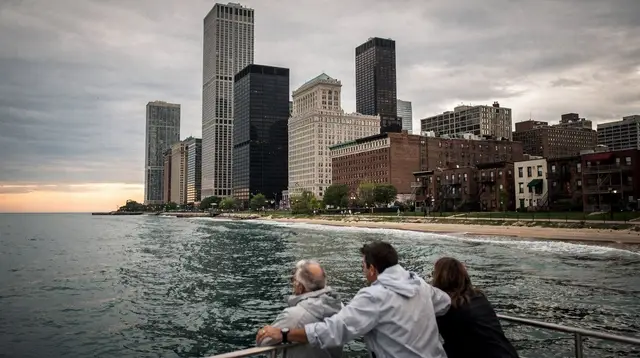
The Chicago architecture river cruise, explained
What is a Chicago architecture river cruise?
It's a guided boat tour on the Chicago River, usually 75 to 90 minutes, departing near the Chicago Riverwalk in the Loop. A live guide points out landmark buildings like the Wrigley Building, Tribune Tower, Marina City and the Willis Tower as seen from the water. Several operators run near-identical routes; the differences are mostly boat size, dock location and time of day.
Why this is Chicago’s most-booked activity
Across booking platforms, architecture river cruises make up the single largest category of things to do in Chicago — dozens of near-identical products compete for the same stretch of river. That popularity is earned: from the water, you see the story of the Chicago skyline in a way no street-level walk can match, and you do it sitting down, out of the wind, in under two hours.
This guide explains what you’re actually buying, what to expect on the water, and how to pick a departure time and boat size that fits your trip. It does not rank individual cruise companies against each other in detail — for that, see architecture cruise companies compared.
What actually happens on the boat
Boats depart from docks along the Chicago Riverwalk, the paved promenade that runs along the south bank of the river through the Loop. You board, find a seat (open-air upper deck or covered lower deck, depending on the boat), and a live guide narrates as the boat moves along the main and south branches of the river.
Typical duration is around 75 to 90 minutes, though a few products run shorter express versions or longer combo trips — always confirm the exact length with the operator, since it isn’t standardized across the industry. The route usually loops past the base of Willis Tower, giving you a very different view of the building than the one from Michigan Avenue or the Loop’s street grid.
Commentary generally covers a consistent set of landmarks:
- The Wrigley Building and Tribune Tower, the pair that anchors the north bank near Michigan Avenue
- Marina City, the twin “corncob” towers, one of the city’s most photographed silhouettes
- 333 West Wacker Drive, the curved green-glass building that follows the river’s bend
- The Merchandise Mart, one of the largest commercial buildings in the world by floor area
- Willis Tower, seen from the water rather than from street level
- Assorted bridges, bridge houses, and the story of how the river’s flow was reversed in 1900
Guides vary in depth and delivery — some lean into engineering detail, others keep it conversational — but the landmark list above is close to universal across operators.
Why the river runs backward — a quick history lesson
The commentary you’ll hear on the water leans heavily on one story: in 1900, engineers reversed the flow of the Chicago River so that it drains away from Lake Michigan instead of into it, protecting the city’s drinking water supply from its own sewage. That single engineering project is one reason Chicago’s downtown skyline developed the way it did, with buildings oriented toward the river rather than turning their backs on it.
The riverside architecture itself tells a second story that predates the reversal: the Great Chicago Fire of 1871 leveled most of the city’s core, and the rebuilding that followed — using new steel-frame construction methods pioneered by architects like Louis Sullivan and Daniel Burnham — effectively invented the modern skyscraper. The 1893 World’s Columbian Exposition, held south of downtown at Jackson Park, further cemented Chicago’s reputation as a proving ground for ambitious architecture and city planning. Later, Mies van der Rohe’s minimalist steel-and-glass towers added a third layer to the skyline you see from the boat. A cruise guide will usually touch on all three eras in some form, even if the emphasis varies by operator.
Getting to the docks without a car
Most Riverwalk docks sit within a few blocks of Loop transit. The CTA “L” — Chicago’s elevated and subway rapid transit system — has multiple stations within walking distance of the Loop docks; see the CTA “L” guide for how the lines connect and which run overnight. If you’re coming straight from the airport, O’Hare connects to the Loop via the Blue Line in roughly 40 to 45 minutes, while Midway connects via the Orange Line in roughly 25 to 30 minutes — both lines terminate close enough to the Riverwalk for a short walk or a quick transfer. Travelers who’d rather skip transit planning altogether can find a broader rundown in getting around Chicago without a car.
Driving in is an option too, but the Loop’s metered street parking is limited and garages near the river fill up on weekends; budgeting extra time to park and walk to your dock is worth it if you’re arriving by car.
What to wear and bring
Because the river cuts between tall buildings that funnel wind off the lake, temperatures on the water read colder than the forecast for the street. In winter, layers and a windproof jacket matter more than they would for an equivalent walk through the Loop; the Chicago winter activities guide has more on dressing for the season generally. In summer, the open-air upper deck is pleasant but still catches a steady breeze, so a light layer is worth carrying even on a hot day — see the summer lakefront guide for how the season shapes outdoor plans citywide. Sunscreen and sunglasses matter more on the water than on land, since there’s no shade on the upper deck and the river reflects extra glare.
Choosing a cruise by traveler profile
First time in Chicago. A standard daytime cruise, 75 to 90 minutes, is one of the most efficient two hours you can spend in the city. It orients you geographically (the Loop, the river’s branches, the lakefront) before you set off on foot. Pair it with the three-day first-timers itinerary or a one-day Loop without a car plan.
Architecture enthusiasts. Consider a slower or more in-depth product, and read up beforehand — the guide’s script covers the highlights but won’t dwell on any one building. Some operators offer combo tickets that pair the cruise with a stop at the Chicago Architecture Center; that combination adds context the boat commentary can’t. If you want a second angle on the same subject matter, architecture-focused walking tours cover different ground at street level.
Traveling with kids. Boats can be crowded, and standard cruises aren’t designed with children’s attention spans in mind. A family-oriented departure, run at a gentler pace with content aimed at younger passengers, is a better fit than the standard commentary track.
Budget-conscious travelers. The river cruise is not the cheapest hour in Chicago, but it typically undercuts a private tour or a helicopter flight by a wide margin. If cost is the main constraint, compare it against a Riverwalk walk on foot (free) before deciding — see the free and cheap things to do guide for context, and the boat-versus-walking comparison below for the tradeoffs.
Daytime, sunset, or night — different products, different views
The commentary script is broadly similar across time slots, but the visual experience changes a great deal:
| Time slot | What you get | Best for |
|---|---|---|
| Daytime | Clearest views of facade detail and stonework | First visit, photography of architectural detail |
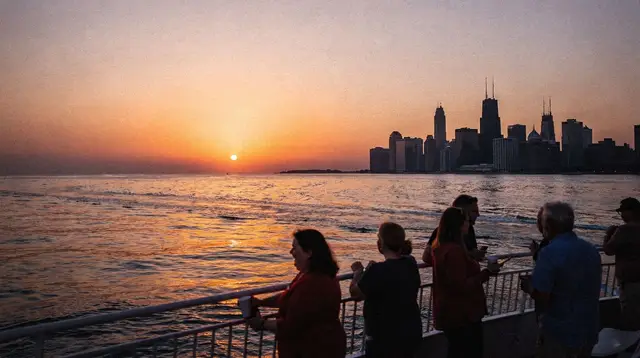
| Sunset | Warm light on the skyline, often a cocktail or drink option | Couples, photographers, a calmer pace |
| Night | Illuminated buildings, skyline lights, cooler air | Repeat visitors, summer evenings |
For the sunset option specifically, see the sunset river cruise guide. For after-dark departures, see the night architecture river cruise guide.
Boat versus walking: not an either/or in a single day
A river cruise and an architecture walking tour cover overlapping subject matter from different vantage points — the boat shows you facades from the water and the reversed-river history, while a walking tour gets you close enough to touch limestone and terra cotta detail the boat can’t. Many visitors do both on the same trip, on different days. If you have to choose one, the tradeoffs (cost, weather exposure, walking distance, seasonal availability) are laid out in full in architecture cruise vs. walking tour.
If you’d rather explore the Riverwalk itself on foot first — the docks, the public art, the restaurants tucked under the bridges — the Chicago Riverwalk guide covers that separately from any boat product.
Practical notes before you book
Dock locations vary by operator. Confirm your exact pier from the booking confirmation, not just “the Riverwalk” — several companies operate from different docks within a few blocks of each other.
Weather and wind. The river runs between tall buildings that funnel wind, and Chicago earns its “Windy City” reputation honestly. Bring a layer even in summer, and expect delays or cancellations in severe weather; most operators offer rebooking rather than cash refunds in that case.
Boarding time. Arrive at least 15 to 20 minutes before departure. Boats run on fixed schedules and typically don’t wait for late arrivals.
Photography. The upper open-air deck gives the best sightlines for photos; the covered lower deck trades the view for shelter from sun, wind, or rain.
Combining with other Loop activities. The Willis Tower Skydeck and Millennium Park are both a short walk from most cruise docks, making it easy to build a half-day Loop itinerary around a single morning or afternoon cruise.
Booking your cruise
Book the standard 75-minute guided architecture cruise for the most widely available daytime option, departing regularly from the Riverwalk.
Traveling with children? Book the family-friendly architecture river cruise, paced and narrated for younger passengers.
Want a longer route that extends onto Lake Michigan as well as the river? Book the 1.5-hour lake and river architecture cruise for a combined skyline view from both the river and open water.
If you’d rather pair the cruise with a stop at the Chicago Architecture Center for deeper context, Book the First Lady river cruise and Architecture Center combo.
Frequently asked questions about the Chicago architecture river cruise
How long does a Chicago architecture river cruise last?
Typically 75 to 90 minutes, though a few operators run shorter or combo versions. Always confirm the exact length with the operator before booking, since it varies by product and season.
Where do architecture river cruises depart from?
Nearly all of them leave from docks along the Chicago Riverwalk in or near the Loop, a short walk from Michigan Avenue and the Willis Tower. Exact dock locations differ by operator, so check your confirmation email for the pier number.
Is the river cruise worth it if I only have one day in Chicago?
For most first-time visitors, yes. It’s the fastest way to understand the city’s layout and skyscraper history in under two hours, and it pairs well with a Loop walk afterward. If time is very tight, prioritize it over a standalone walking tour.
What buildings will I see on the cruise?
Commentary usually covers the Wrigley Building, Tribune Tower, Marina City, 333 West Wacker, the Merchandise Mart and the Willis Tower viewed from the river, among others. The exact list depends on the route and how far the boat travels.
Is the architecture cruise better than a walking tour?
They cover different ground and aren’t a strict substitute for each other. See our dedicated comparison for how to choose between a river cruise and a walking tour based on your interests and mobility.
Should I book a daytime, sunset, or night cruise?
Daytime gives the clearest views of facades and detail; sunset adds skyline color; night cruises focus on illuminated buildings and skyline lights. Each has its own guide linked below.
Do I need to book in advance?
In peak summer months and on weekends, popular departure times sell out, so booking a day or two ahead is a reasonable precaution. Shoulder-season weekday cruises are more forgiving.
Is the cruise accessible for wheelchair users or people with mobility limitations?
Some boats and docks are more accessible than others; this varies by operator and vessel. Check the specific listing for accessibility details before booking, or see our accessible tours guide.
Chicago River architecture and sightseeing cruises on GetYourGuide
Verified deep-linked GetYourGuide tours. Book through these links and we earn a small commission at no cost to you.
GetYourGuide does not provide a product photo for this activity — the image shows the meeting point, photographed by us.