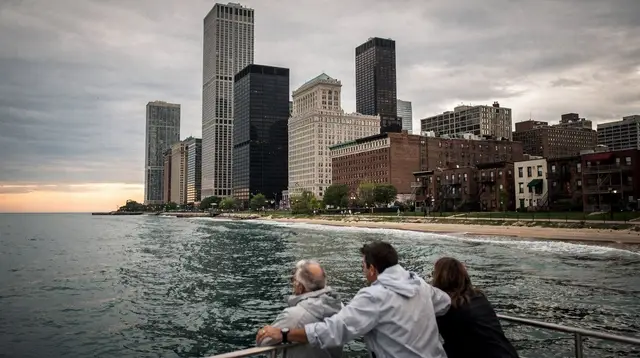
Best time to visit Chicago
When is the best time to visit Chicago?
Late spring through early fall (roughly May to October) gives the widest range of outdoor options, including lake activities and river cruises, with September and October often rated the most comfortable. Winter suits travelers focused on museums, theater, and holiday events, but limits time on the water and on bikes.
There is no single right answer
Chicago does not have one “best” season so much as several honest trade-offs, and the right pick depends on what you actually want to do. Someone planning a kayak trip down the Chicago River and an afternoon on a lakefront beach needs a completely different window than someone planning a week of museums, theater, and blues clubs. This guide sorts the year by priority — comfort, outdoor activity, or indoor culture — instead of handing you a single recommended month and moving on.
Before the seasonal detail, one practical note that trips up a lot of visitors: Chicago runs on Central time, and like most of the United States it observes daylight saving time. That means the clock offset from your home country shifts by an hour depending on whether you visit in Central Standard Time (winter) or Central Daylight Time (summer). If you are booking flights or coordinating a call home, check the current offset for your travel dates rather than assuming it stays fixed year-round — Chicago is one of the destinations on this site where the clock actually moves twice a year.
If comfort is your priority
Late spring (May) and fall (September into October) are the seasons most travelers and locals point to when comfort is the deciding factor. Summer in Chicago turns hot and humid, which is exactly what makes the lake so appealing but can wear on visitors doing a lot of walking between the Loop, the Riverwalk, and the Lakefront Trail. Winter swings the other way: cold and famously windy, a real factor here given the corridor effect between the downtown towers and the open lake — “Windy City” is not just a nickname, it is a planning consideration.
Spring and fall thread the needle: mild enough for a full day outdoors, cool enough that a walking tour of the Loop or a river cruise does not feel like an endurance exercise. The trade-off is a shorter window before or after the warm-weather activities fully ramp up or wind down, and spring in particular tends to arrive later than visitors expect from a “spring” label.
If outdoor and lake activities are your priority
If a kayak trip, a lake cruise, or an afternoon at the beach is the point of your visit, the warm months are not optional — they are the season. Lake Michigan is freshwater, not the ocean, and the municipal beaches only run supervised, lifeguarded swimming during the warmer stretch of the calendar; outside that window the beaches are still there, but nobody is watching the water and most people stay off it. The same seasonality shapes river kayaking on the Chicago River and most lake cruise departures: operators build their schedules around the warm season and taper off, or pause entirely, once the weather turns.
Cycling is the other activity that quietly depends on the season. Divvy bikes and the Lakefront Trail are genuinely pleasant in summer and shoulder season, but cold, wind, and occasional ice make winter riding a niche pursuit rather than a default option — most visitors simply do not bike Chicago in January. For the full rundown of what actually runs and roughly when, see the Chicago summer lakefront guide, which goes deeper on this exact question than this overview does.
If museums and indoor culture are your priority
This is where a Chicago winter stops being a compromise and becomes a legitimate reason to visit. The Art Institute of Chicago, the Museum Campus institutions, blues and jazz clubs, and the city’s theater scene all run at full capacity regardless of temperature — arguably with better availability and fewer crowds than in July. Hotel rates in the core downtown area often ease off outside summer and the holiday weeks, too, which is a real upside for a trip built around indoor culture rather than the lakefront.
The honest caveat: winter genuinely limits what else you can layer onto a museum-heavy trip. Kayaking, lake swimming, most cycling, and some open-air walking tours are off the table or reduced, and the cold and wind are real enough to shape how much time you want to spend outside between stops. If a winter trip is on your radar, the Chicago winter activities guide covers what specifically stays open and what to plan around in more detail than fits here.
A season-by-season summary
| Season (roughly) | Comfort | Outdoor / lake activities | Museums & indoor culture | Trade-off to know |
|---|---|---|---|---|
| Spring (Apr–May) | Improving, still variable | Ramping up late in the season | Fully open | Spring arrives later than the calendar suggests |
| Summer (Jun–Aug) | Hot and humid | Peak — beaches, kayaking, cruises | Fully open, busier | Highest demand and pricing for lake-based tours |
| Fall (Sep–Oct) | Often the most comfortable | Still running, tapering by late fall | Fully open | Short window before outdoor options wind down |
| Winter (Nov–Mar) | Cold and windy | Very limited to closed | Fully open, often better availability | Layer up; some outdoor tours pause for the season |
Treat this table as a shape, not a forecast — Chicago’s weather is genuinely variable year to year, and any specific-sounding temperature you see elsewhere should be checked against current data rather than assumed to repeat.
The holiday weeks are their own case
Late November through December deserves a separate mention because it does not behave like the rest of winter. Downtown Chicago leans hard into the season with lights, markets, and ice rinks, and it is a legitimately good pick for travelers who specifically want that atmosphere. But it stacks the coldest stretch of the year with the busiest hotel and event calendar of the winter months, so it is worth planning as its own decision rather than a generic “winter visit.” The Chicago Christmas and holiday guide is the place to look at that window specifically, including what is worth booking ahead.
If a holiday-season trip is on the table, a guided walk through the decorated Loop and Magnificent Mile is a low-effort way to see the season’s highlights with some local context — that’s roughly the pitch behind the Holiday Chicago Walking Tour, though obviously it only makes sense for a late-November or December trip, not a summer one.
How to choose, practically
A few honest heuristics, rather than a single verdict:
- First-time visitor with flexible dates and no strong lake or winter interest: aim for May or September–October. You get the Riverwalk, architecture cruises, and most attractions at their most comfortable, with fewer crowds than peak summer. A broad orientation tour like the Essentials Pass covering three top attractions works well in this window because it is not weather-dependent.
- Kayaking, beaches, or a lake cruise are the actual goal: book for summer, and expect summer pricing and crowds as the cost of that choice. See the kayaking guide and the summer lakefront guide for what specifically runs when.
- Museums, theater, and a lower travel budget matter more than outdoor time: winter (outside the holiday weeks) is genuinely underrated for this. Check the winter activities guide before you write winter off.
- You want the holiday atmosphere specifically: treat late November–December as its own season, book hotels early, and expect cold — see the Christmas and holiday guide.
- You’re building a rainy or unpredictable-weather backup plan for any season: a rainy-weekend museum itinerary works regardless of when you’re visiting, since it leans entirely on indoor stops.
For visitors weighing several days rather than a single activity, a three-day first-timer itinerary or a dedicated summer lakefront, kayak, and bike itinerary can help translate “which season” into an actual day-by-day plan. A scenic overview drive covering the lakefront, the Loop skyline, and a few outlying neighborhoods is one of the few tours that works reasonably well across seasons, which is the logic behind the Chicago Scenic Driving Tour as a flexible option regardless of when you land.
Getting oriented before you land
Whatever season you choose, a couple of logistics stay constant. Chicago’s elevated transit system, the L, runs year-round with only the Red and Blue Lines operating overnight; the other lines pause late at night regardless of season. From O’Hare, the Blue Line into the Loop takes roughly 40 to 45 minutes in any weather, so plan the same transit buffer whether you land in January or July.
If you want a local’s framing of the city before committing to a season, a private walking tour is a reasonable way to get oriented on day one — that’s the idea behind the Best of Chicago Private Walking Tour with a Local, which can be booked in most seasons since it moves at whatever pace the weather allows.
What the weather actually looks like, season by season
Numbers help more than adjectives here, so treat the following as rough, NOAA-scale ranges rather than a forecast for your specific dates. In the depths of winter, daytime highs hover around freezing — roughly 0°C (32°F) — with wind off the lake making it feel colder than the thermometer suggests, which is exactly why the corridor between the downtown towers earns Chicago its “Windy City” reputation on a cold January afternoon.
Summer runs the other direction: daytime highs typically sit in the 25–28°C (mid-70s to low-80s Fahrenheit) range, with humidity that makes the lakefront breeze genuinely useful rather than optional. Spring arrives later than its name implies, with a slow climb out of winter that can still deliver a cold snap into April, and fall is often the season locals quietly prefer — the humidity of summer breaks, the wind hasn’t turned biting yet, and the Riverwalk and lakefront stay comfortable to walk well into October.
Day trips are more season-sensitive than the city itself
Chicago’s museums and downtown attractions run year-round, but several of the region’s best day trips lean harder on the calendar than the city core does. A trip to Milwaukee, just across the state line in Wisconsin, works in any season since it is largely an indoor-and-city itinerary, but the Chicago-to-Milwaukee transport guide is worth checking regardless of month for current schedules. Starved Rock and Galena, by contrast, are built around hiking, waterfalls, and river bluffs, so they reward a spring or fall visit far more than a January one, when trails can ice over and the drive itself gets less predictable.
Closer to the city, Oak Park — Frank Lloyd Wright’s home base and Ernest Hemingway’s birthplace — is a walkable, mostly outdoor architecture circuit, and the Oak Park Frank Lloyd Wright museums guide is more pleasant to follow on foot in the shoulder seasons than in deep winter cold or peak summer humidity. If a day trip is part of the plan, it is worth choosing the season around the day trip’s outdoor demands, not just the city’s.
Booking timing and what season affects beyond weather
Season shapes more than temperature. Hotel rates in downtown Chicago typically climb through summer and spike again around the winter holidays, so travelers chasing value tend to land in May or in the stretch after Labor Day through October, when the weather is still cooperative but demand has eased.
Keep in mind that prices quoted around Chicago are generally shown before sales tax, and that a hotel stay carries an additional lodging tax on top of that — details worth checking against current rates when you actually book, since tax rules get revised from time to time and this guide is not the place to lock in a specific figure. None of that changes which season suits your itinerary best, but it does mean the “cheapest” season and the “most comfortable” season are not always the same answer, and travelers with a fixed budget may want to weigh September evenings against July afternoons with cost as well as comfort in mind.
FAQ: picking a season for your Chicago trip
What is the single best month to visit Chicago?
There is no universal answer, but September and early October are frequently recommended: summer crowds thin out, humidity drops, and outdoor activities like the Riverwalk and Lakefront Trail remain fully open.
Is Chicago too cold to visit in winter?
Winter is genuinely cold and windy, which rules out kayaking, lake swimming, and most cycling, but it does not close the city. Museums, theater, blues clubs, and holiday events run at full capacity, and hotel rates often drop.
Does Chicago observe daylight saving time?
Yes. Chicago is in the Central time zone and switches between Central Standard Time in winter and Central Daylight Time in summer, like most of the continental United States, so international visitors should double-check the current offset when booking flights or tours.
When can you swim at Chicago’s beaches?
Lifeguard-supervised swimming at the municipal beaches runs only during the warm months of the calendar, roughly late spring through early fall. Outside that window the lake is still there, but nobody is watching the water.
Is summer too crowded and expensive to visit Chicago?
Summer is the highest-demand season for hotels and lake-based tours, and prices reflect that. Late spring and early fall offer a middle ground: milder crowds, softer pricing, and most warm-weather activities still running.
What is Chicago like during the winter holidays?
The city leans into it, with lights, markets, and ice skating downtown, but it also means peak cold. Travelers considering that specific window should weigh it as its own season rather than a stand-in for winter generally.
Do outdoor activities like kayaking and biking run year-round?
No. River kayaking, lake cruises, and most Divvy bike use cluster in the warmer months when operators run regular schedules; cold-season availability is limited or paused entirely, and organizers set their own start and end dates by year.
Seasonal tours and activities on GetYourGuide
Verified deep-linked GetYourGuide tours. Book through these links and we earn a small commission at no cost to you.
GetYourGuide does not provide a product photo for this activity — the image shows the meeting point, photographed by us.