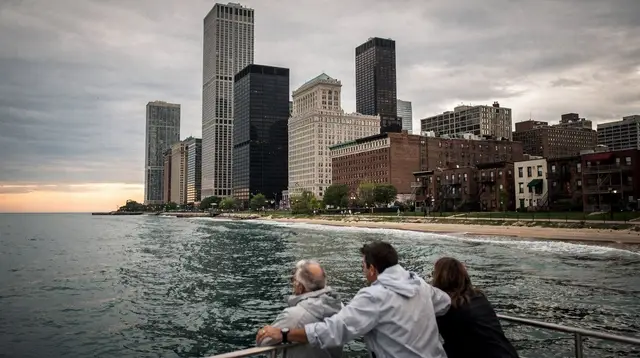
Chicago in winter: the season everyone warns you about
Why I went against every piece of advice I’d been given
Everyone who found out I was going to Chicago in January said some version of the same sentence: why not wait until summer. I understood the logic. Summer means the beaches along Lakefront Trail are open, the Riverwalk is full of people drinking on patios, and the wind off the lake is a breeze instead of a blade. I went in winter anyway, mostly because it was the only week I had, and I came back with a completely different opinion of the city than the one every guidebook had prepared me for.
I’m not going to pretend the cold isn’t real. It is, and I’ll get to that. But I want to make the case for a season that gets dismissed almost automatically, because some of the best hours I’ve spent in any American city happened on sidewalks in Chicago in January, with nobody else around. Before I left, I’d skimmed a best time to visit Chicago guide and a rundown of Chicago winter activities, and both were more encouraging than the group chat had been, which is part of why I went ahead and booked the flight anyway.
The light on the Loop that summer doesn’t have
I arrived at the Loop on a grey afternoon, and the first thing that struck me wasn’t the cold, it was the light. Winter sun in Chicago sits low all day, and when it does break through the cloud cover, it comes in sideways between the buildings and turns the whole canyon of the Willis Tower and its neighbors into something closer to a black-and-white photograph than a postcard. I stood on a corner near Wacker Drive for a good ten minutes just watching that light move across the facades, and nobody bumped into me, because there was almost nobody there. I ended up doing a slower version of a Chicago Loop walking tour than I would have in summer, simply because there was no crowd to keep pace with.
That’s the part nobody mentions when they tell you to avoid winter: the crowds that make summer in downtown Chicago exhausting simply aren’t there. I walked the Chicago Riverwalk on a Tuesday morning and had entire stretches of it to myself, ice forming at the edges of the river, steam coming off a few open patches of water. It felt less like a tourist attraction and more like a place people actually live near, which, of course, it is. I’d also read up on the Willis Tower Skydeck beforehand, and going up on a clear, cold day turned out to be one of the better calls of the trip, since winter air tends to cut visibility problems that summer haze creates.
An evening on the river when the water had ice in it
The moment that convinced me winter deserved a second look happened on my third evening. I’d booked a spot on an architecture cruise along the Chicago River, mostly out of curiosity about whether anyone even runs these in the cold months, and mostly expecting a compromise version of the summer experience. It wasn’t. The boat was maybe a third full. The guide, freed from having to raise her voice over a packed deck, told longer stories, took more questions, lingered under bridges. The skyline against a hard blue winter sky, with a little ice drifting on the water, had none of the summer haze that softens the edges of the buildings. Every setback and cornice on the old Loop skyscrapers was sharp. I’ve since read that the light quality difference is a known thing among architecture photographers here, but I hadn’t expected it to matter this much in person.
I stood at the rail with my hands jammed in my pockets, genuinely cold, and thought: this is better than sweating through the same route in July. If you’re comparing options before you book, an architecture river cruise guide lays out the differences between the daytime and evening departures, and there’s a separate night architecture cruise writeup if you want the lit-up skyline version specifically. On land, an Art Deco skyscrapers walking tour covers a lot of the same buildings from street level, which is worth pairing with the boat if you have the extra afternoon — I did a version of it myself with an Art Deco walking tour and it made the skyline make a lot more sense from below.
Where the cold actually became the point
The next morning I walked north along Michigan Avenue toward the Magnificent Mile, and the wind coming off Lake Michigan hit me at every cross street in a way that summer visitors simply never experience. This is the real, unglamorous part of winter here: the lake doesn’t warm the air in January, it sharpens the wind, and Chicago earns its Windy City reputation honestly in these months. My face was numb within a block. A Magnificent Mile walking tour guide I’d read beforehand had actually warned me about exactly this stretch, so at least I wasn’t surprised.
I ducked into a coffee shop, and this became a kind of rhythm for the rest of the trip — short stretches outside, then a warm interior, then back out. It’s a different way of moving through a city than the long, aimless summer walk, but it’s not a lesser one. It forces you to notice things in smaller doses, and I found myself paying closer attention to storefronts and doorways than I ever do when I’m strolling comfortably.
That rhythm is also, honestly, why winter works well if you’re traveling with kids. On one of the colder afternoons I ducked into the Legoland Discovery Center mostly to warm up, and it turned out to be exactly the kind of indoor stop a Chicago with kids guide would point you toward — the sort of thing that barely crosses your mind in July but becomes the obvious answer to “where do we go for the next two hours” in January.
Night also falls hard and early in a Chicago winter, and I won’t pretend that’s not disorienting the first time it happens to you mid-afternoon. But an early dark city has its own atmosphere. Walking back toward my hotel around five in the evening, streetlights already on, the Loop’s older buildings lit from below, felt closer to how I imagine the city looked decades ago than anything I saw under a bright July sky.
The night the wind won
I should be honest about the low point too, because a piece written only about the good parts of winter here would be dishonest. One evening I tried to walk the length of the Riverwalk after dark, underestimating how much colder it gets once the sun is fully down and the wind has nothing left to fight. About halfway along I gave up, cut up to street level, and caught the L back to where I was staying instead of finishing the walk.
Having already looked over a CTA L train guide, I at least knew which line to catch without standing on a cold platform trying to work it out. That night reminded me that Chicago’s winter isn’t a mild inconvenience dressed up as adventure. It can genuinely shorten your plans, cut an evening short, change your route. I don’t think that disqualifies the season. I think it’s just the trade you’re making — and it’s one I write about in more detail in a separate piece on riding the L off-peak, since winter timetables and near-empty trains go hand in hand.
Days I didn’t want to be outside at all, I leaned on the indoor heavy hitters. An Art Institute of Chicago fast pass guide got me through the doors quickly on a morning when the wind chill made queueing outside genuinely unpleasant, and the Museum Campus — the Field Museum, the Shedd Aquarium, the Adler Planetarium — turned into an entire day I hadn’t originally planned for, once I realized how little else I wanted to do outdoors. If you’re weighing which of the three to prioritize, the Field Museum guide and the Shedd Aquarium guide both helped me decide.
What I’d tell someone weighing the same trip
I’m not arguing that winter is better than summer in some absolute sense, or that everyone should book a January flight instead of a July one. Beaches, patios, the full run of festivals along the lakefront — those genuinely belong to summer, and I’ve written separately about Lake Michigan’s beaches and the urban summer and the Chicago summer lakefront for anyone weighing that season instead. What I am arguing is that the near-universal advice to skip Chicago in winter assumes everyone wants the same trip: crowded, warm, social, outdoor-focused. If instead you want a quieter, sharper, more architectural version of the city, one where a boat has room to breathe and a sidewalk in the Loop belongs mostly to you, winter delivers something summer structurally cannot.
If you’re building out an actual itinerary around this, a three days in Chicago for first-timers guide still works fine as a skeleton in winter, you just swap outdoor blocks for indoor ones. And if your trip happens to land near the holidays, the Chicago Christmas and holiday guide and a winter weekend of Christmas markets itinerary cover a version of winter here that’s even busier and warmer, in spirit if not in temperature, than the quiet January I had. For day trips beyond the city, a Starved Rock and Galena guide and a Milwaukee day trip guide are both worth a look if the weather clears — the same low winter light I found in the Loop shows up nicely over the Illinois countryside too.
Questions about visiting Chicago in winter
Is Chicago’s winter really as cold as people say?
Yes, it’s genuinely cold, and the wind off Lake Michigan makes it feel sharper than the temperature alone suggests, especially near the water and in the canyon-like streets of the Loop. It’s not exaggerated for effect.
Are there fewer tourists in Chicago during winter?
Noticeably fewer. Attractions, river cruises, and popular sidewalks that feel crowded in summer are calm to nearly empty on winter weekdays, which was the biggest difference I noticed compared to what I’d been told to expect.
Does the architecture cruise still run in winter?
Yes, boat tours along the Chicago River continue through the colder months, just with smaller groups and different weather conditions than the summer version, which changes the experience rather than diminishing it.
Is walking around downtown Chicago in winter unpleasant?
It can be, particularly near the lakefront where wind is strongest, but short bursts of walking between warm interiors is a normal and workable rhythm rather than something that ruins the trip.
Does it get dark early in a Chicago winter?
Yes, nightfall comes in the mid-afternoon in the depths of winter, which reshapes the day but also gives the city an early-evening atmosphere that summer visitors never see.
Would you recommend a winter trip to Chicago for everyone?
No. If your priority is beaches, outdoor festivals, or long unstructured walks, summer suits that better. Winter suits people who want a quieter, more architectural, more personal version of the same city.
Seasonal tours and activities on GetYourGuide
Verified deep-linked GetYourGuide tours. Book through these links and we earn a small commission at no cost to you.
GetYourGuide does not provide a product photo for this activity — the image shows the meeting point, photographed by us.