2 days of gangsters and Prohibition in Chicago
Chicago’s Prohibition years left more than legend behind. The Loop still carries the office buildings, alleys, and hotel lobbies where bootlegging money moved through the city’s boom-era architecture, and a handful of restaurants and bars in River North occupy spaces that trace back to the same period. This two-day route strings those sites together on foot and by L train, without touching the Museum Campus, the observation decks, or anything that requires a car.
It’s built for visitors who want the Al Capone-era history to feel grounded in real buildings and real streets rather than staged theatrics, though it does include one guided walking tour and one architecture cruise to add context a self-guided walk can’t.
Why the Loop’s skyline tells the Prohibition story
The connection between Chicago’s skyscrapers and its Prohibition-era underworld starts decades earlier, with the Great Chicago Fire of 1871. The fire leveled much of the city’s core, and the reconstruction that followed turned Chicago into the birthplace of the modern skyscraper, with architects like Louis Sullivan, Daniel Burnham, and later Ludwig Mies van der Rohe reshaping the Loop’s skyline. By the 1920s, when Prohibition took hold nationally, that same building boom was still running, and bootlegging profits flowed into office towers, hotels, and warehouse conversions alongside legitimate capital. That overlap, more than any single Capone landmark, is what this itinerary is built to show: the era’s architecture and its organized crime economy grew up together in the same few blocks.
This same period also reshaped Chicago culturally in ways that extend beyond gangsters. The Great Migration brought hundreds of thousands of Black Americans from the South to Chicago in the early 20th century, and the city became a birthplace of electric blues as a result, a thread worth following after this itinerary if the music history interests you as much as the crime history does. The best blues and jazz clubs guide and the live music venues guide both cover venues with roots in that same era.
Day 1: The Loop, a former speakeasy, and River North
Morning (10am-1pm): Walking the Loop’s Prohibition-era facades
Start in the Loop, Chicago’s historic core and the same few square blocks where bootlegging profits financed some of the city’s most ambitious office towers in the 1920s. A guided walking tour is the most efficient way to connect the dots between a building’s facade and its Prohibition-era backstory, since most of these sites carry no plaque or marker today.
a guided walk through the Loop’s Art Deco-era buildings covers several structures built or renovated during the 1920s and early 1930s, when Prohibition money and a citywide construction boom overlapped. The guide points out lobby details, elevator grilles, and stone carving that survive largely unchanged, and explains how the era’s architecture and its organized crime economy were more connected than most guidebooks admit.
Budget the full three hours for this walk, including stops for photos and questions. It moves at a relaxed pace and covers roughly 2 kilometers within the Loop.
For readers who want a fuller history-first framing rather than an architecture-first one, see the Al Capone gangster tour guide and the Devil in the White City bus tour guide, which cover overlapping ground with a different operator and format.
Lunch (1pm-2:30pm): A former speakeasy turned restaurant
Several Loop and River North restaurants occupy spaces that operated as speakeasies during Prohibition, later converted to legitimate dining rooms once the 18th Amendment was repealed in 1933. Expect a below-street-level entrance, low ceilings, and sometimes a genuinely hidden or unmarked door as a nod to the building’s history rather than a themed gimmick.
Prices at these spots run mid-range, roughly 20 to 35 USD per entree, before the 10.25 percent Chicago sales tax and before tip (18 to 22 percent is standard). Reservations help on weekends but aren’t usually required on weekdays.
Afternoon (2:30pm-5pm): Riverwalk to River North
From the Loop, walk north to the Chicago Riverwalk, the pedestrian path along the south bank of the Chicago River. This stretch didn’t exist in its current form during Prohibition, but it offers the best sightline back toward the Loop’s skyline and sets up the river crossing into River North on foot.
River North, just across the river from the Loop, retained more of its early-20th-century warehouse and commercial buildings than almost any other downtown-adjacent neighborhood, partly because redevelopment came later here than in the Loop itself. Several buildings in this stretch date to the 1910s and 1920s and functioned as fronts for bootlegging operations, storage, or distribution during the Prohibition years. A guide or a well-researched self-guided route helps here, since most of these buildings now house unrelated businesses with no historical signage.
For a broader look at the neighborhood beyond this itinerary’s scope, see the gangsters and ghosts walking tour guide.
Evening (6pm-8pm): A speakeasy-style cocktail bar
Close day one at a speakeasy-style cocktail bar, a genre River North and the Loop both do well. These bars typically use a deliberately hidden or unmarked entrance, sometimes through a phone booth, a bookshelf, or an unlabeled door beside another business, as a stylistic homage to the era rather than actual concealment. Nearly all of them require reservations, especially Thursday through Saturday, so book before you arrive in the city if this is a priority.
Expect cocktails in the 16 to 22 USD range before tax and tip, and a strict no-walk-in policy at the more popular locations. The craft cocktail bars guide covers several options across price points if the first choice is booked out.
If ghost stories interest you as much as gangster history, an evening ghost walk through some of downtown’s most storied blocks pairs well as a pre-dinner or late addition, since several stops overlap with buildings tied to the same Prohibition-era violence.
Day 2: The river’s-eye view and free time
Morning (10am-1pm): Architecture cruise from the Loop docks
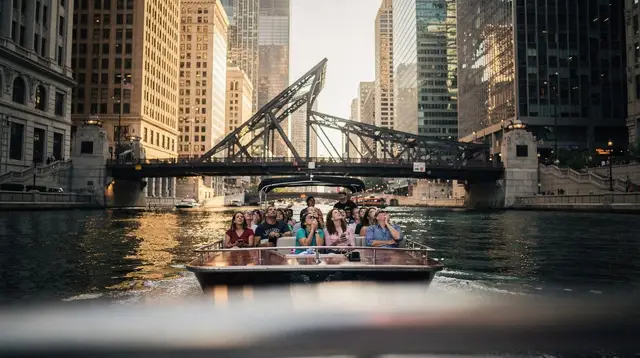
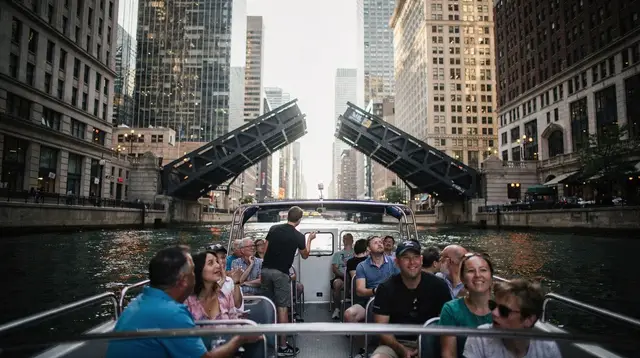
Day two starts at the boat docks along the Loop’s riverfront for a narrated architecture cruise along the Chicago River. The cruise itself covers the city’s full architectural arc, not Prohibition specifically, but it’s the best way to see the Loop and River North skyline as a whole and understand how tightly packed the era’s construction boom actually was, block by block, along the river the bootlegging trade also used for transport.
Cruises depart roughly every 30 to 45 minutes depending on season and typically run 75 to 90 minutes. Morning departures are less crowded than afternoon ones, and booking ahead is worth it on weekends. For a side-by-side comparison of operators and boat types, see the architecture river cruise guide and the Chicago Architecture Center boat tour review.
An alternative for readers who’d rather stay on land: a 90-minute walking tour tracing the evolution of the Chicago skyscraper covers similar architectural ground from street level instead of the water, useful if the cruise is sold out or the weather turns.
Afternoon (1:30pm-4:30pm): Free time to go deeper
The afternoon is left open by design. Use it to revisit a Loop building from day one at a slower pace, follow up on a lead from the morning’s cruise commentary, or visit an exhibition tied to the city’s early-20th-century history. The Chicago History Museum, north of the Loop, is a reasonable option if it fits your route, though it isn’t part of this itinerary’s core stops.
This is also the point to note what this itinerary deliberately leaves out: it doesn’t include the Museum Campus (Field Museum, Shedd Aquarium, Adler Planetarium), and it doesn’t include the Skydeck at the Willis Tower or 360 Chicago and TILT at 875 North Michigan Avenue. Those belong to a different kind of Chicago visit and are covered in the Skydeck Willis Tower guide and the 360 Chicago and TILT guide if you want to add them on a separate day.
Getting around without a car
Everything in this itinerary sits within the Loop, the Riverwalk, and River North, an area small enough to cover on foot in a day, with the Red and Blue Line L trains available for longer hops or bad weather. Both lines run 24 hours a day, unlike the rest of the CTA’s L network, so late finishes after the evening cocktail bar are never a transit problem. A Ventra card or the Ventra app covers fares on the L and city buses. See the CTA L train guide for fare details and line maps, and the Chicago Loop walking tour guide for a self-guided version of day one’s morning route.
Budget for this 2-day route
| Item | Estimated cost (USD, before tax) |
|---|---|
| Loop walking tour | 30-40 per person |
| Speakeasy lunch | 20-35 per entree |
| Evening cocktail bar (2 drinks) | 35-45 per person |
| Architecture cruise | 45-55 per person |
| L train fares (2 days) | 10-15 per person |
Prices are ranges, not fixed rates, and exclude Chicago’s roughly 10.25 percent sales tax and standard 18 to 22 percent restaurant tipping. Confirm current pricing directly with each operator before booking. If you’re staying in a downtown hotel for these two nights, note that Chicago’s lodging tax runs well above the sales tax rate, among the highest of any major US city, so factor that into a hotel budget separately from the itinerary costs above.
Extending this trip
Two days covers the Prohibition-era core comfortably, but a handful of related routes go further in either direction. Readers building a longer stay around this one should look at the three-day Chicago first-timers itinerary or the two-day Chicago highlights itinerary for a version of the city that adds the Museum Campus and the observation decks back in. Readers who want to stay in the Prohibition and true-crime lane a little longer, without repeating stops from this route, can pair it with the haunted history of Old Town guide or the Prohibition speakeasy bar tour guide, both of which cover neighborhoods and bars outside the Loop and River North footprint used here.
For a day trip that connects to this same period from a different angle, Al Capone’s operation extended well beyond city limits, and the Milwaukee day trip guide covers the closest out-of-state option, a Wisconsin city roughly 90 minutes from Chicago by car or by the Amtrak Hiawatha train from Union Station. It’s a full extra day rather than an add-on to either day of this route, so plan it as a separate trip rather than trying to fit it into this two-day window.
Gangster and Prohibition Chicago: common questions
Do I need a car for this itinerary?
No. Every stop sits within the Loop, the Riverwalk, and River North, all walkable or a short L ride apart on the Red or Blue Line.
Is this the same as a Museum Campus or architecture-only itinerary?
No. This route skips the Field Museum, Shedd Aquarium, Adler Planetarium, and the Skydeck and 360 Chicago observation decks entirely, focusing instead on street-level Prohibition-era sites.
What should I book in advance?
The speakeasy-style cocktail bar on evening one and the architecture cruise on morning two both sell out on weekends in summer, so reserve both a few days ahead. The lunch spot is more flexible.
How much walking is involved?
Day one covers roughly 3 to 4 kilometers of flat city walking split across morning and afternoon. Day two is lighter, with most of the morning spent seated on the boat.
Is this itinerary appropriate for kids?
It works better for teens and adults. The cocktail bar has an age minimum, and the historical content centers on organized crime and violence, which younger children may not find engaging.
What’s the best time of year to do this route?
Spring and fall keep the walking segments comfortable and the cruise dock lines shorter. Summer works too but book the evening bar and the cruise earlier in the day.
Are the speakeasy bars actually secret?
Most modern Chicago speakeasy-style bars keep a deliberately unmarked or hidden entrance as a nod to the era, but they’re listed online and take reservations like any other bar or restaurant.
tours.2 days
Verified deep-linked GetYourGuide tours. Book through these links and we earn a small commission at no cost to you.
GetYourGuide does not provide a product photo for this activity — the image shows the meeting point, photographed by us.