Craft cocktail bars in Chicago: a guide to the city's mixology scene
What's the best way to experience Chicago's craft cocktail scene?
Book a guided cocktail walking tour that already has relationships with hidden-door bars, since many of the best rooms have no sign and limited seating. Go on a weeknight if you want a seat without a wait, confirm you're 21 or older with valid ID, and check each bar's hours directly before you go, since Chicago bars change their schedules often.
A city that treats cocktails as a craft, not an afterthought
Chicago has one of the more serious cocktail cultures in the United States, and it’s easy to walk past most of it without noticing. The city’s better bars tend not to advertise. A doorway with no sign, a wall of vintage phone booths, a reservation-only room behind a diner counter — these aren’t gimmicks so much as a genuine aesthetic that Chicago’s bartenders have leaned into for close to two decades. This guide is about that scene: where its energy concentrates, what to expect walking in cold, and how a guided evening can get you past the door faster than showing up and hoping for a table.
This is a nighttime, adults-only guide. If you’re after the historical angle — Prohibition, bootlegging, the real speakeasies that operated when a hidden bar wasn’t a design choice but a legal necessity — that story is covered on its own page, Prohibition and speakeasy bar tours in Chicago, and this guide won’t repeat it. Likewise, if you want a themed evening built around ghost stories and local legends rather than drinks themselves, that’s a different experience covered in the haunted pub crawl guide. What follows here is about the bars, the neighborhoods, and the craft — full stop.
One housekeeping note before anything else: the legal drinking age in Illinois is 21, and Chicago bars check ID at the door as a matter of routine, not suspicion. Bring a valid photo ID even if you’re decades past 21. And because bar hours, cover policies, and reservation systems in Chicago change often — sometimes seasonally, sometimes because a bar just changed ownership — always confirm opening hours directly with the venue or its own website before building an evening around it. Nothing below should be read as a fixed schedule.
The hidden-door aesthetic, and why it’s everywhere here
Chicago’s obsession with concealed bars traces back to a specific wave of openings in the 2000s and 2010s, when a handful of bartenders started building rooms that borrowed Prohibition-era theater — unmarked doors, low lighting, house rules about phones and noise — without pretending to be historical sites. The look caught on, and today it’s less a niche than a house style across much of the city’s better cocktail scene. You’ll find bars entered through a diner, a laundromat facade, or a bookcase that swings open, alongside plenty of straightforward, well-lit rooms that just happen to make excellent drinks.
The through-line across both styles is technique: house-made syrups and bitters, hand-cut ice, and bartenders who treat a cocktail list the way a kitchen treats a tasting menu, with seasonal rotation and a point of view. It’s a different kind of evening than a beer-and-a-shot bar, and it rewards slowing down — one or two well-made drinks, unhurried, rather than working through a list.
Where the scene concentrates
Chicago’s cocktail bars aren’t evenly spread across the city; they cluster in a handful of neighborhoods, each with a distinct personality.
| Area | Character | Good for |
|---|---|---|
| River North | Polished, high-design rooms, some inside hotels | A dressed-up night out, groups |
| West Loop / Fulton Market | Newer openings, paired with the city’s strongest restaurant strip | Dinner and drinks in one outing |
| Wicker Park / Logan Square | Lower-key, more experimental, younger crowd | A casual, exploratory evening |
| Old Town | Small, atmospheric rooms near Lincoln Park and Old Town | An intimate, low-volume evening |
The West Loop and Fulton Market corridor in particular has become the city’s most concentrated food-and-drink strip over the past decade, and it’s a natural pairing if you want dinner and cocktails without moving far. Wicker Park and Logan Square, covered in more depth in the neighborhood guide, trade polish for personality — expect smaller rooms, more offbeat drink lists, and fewer lines.
Downtown, in and around the Loop and along the Riverwalk, the cocktail scene skews toward hotel bars and rooftop rooms, several with skyline views that make them worth a visit even before the drink arrives. A river-based evening cruise that folds in cocktails and Chicago’s famous architecture is one of the more efficient ways to combine the two — see the option below.
Guided versus wandering in on your own
Walking into Chicago’s cocktail scene cold has one real drawback: the best-known hidden bars are, by design, hard to find, and several operate reservation systems or limited seating that fills up fast on weekends. A guided evening solves the finding problem and usually the seating problem too, since operators build relationships with a rotating handful of bars.
a guided walk through several under-the-radar, mid-century-styled cocktail rooms with a local host is built specifically around this idea — it takes the guesswork out of finding doors that don’t announce themselves, and it introduces a few bars in one evening rather than committing to just one.
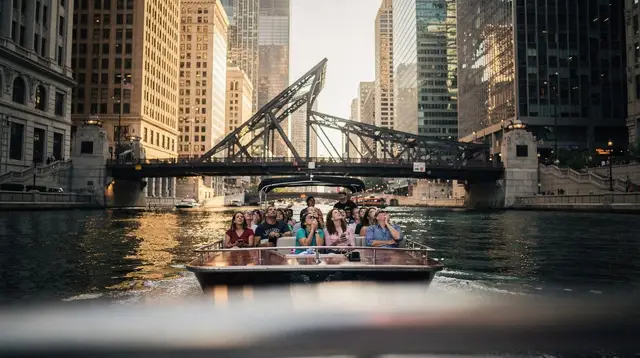
If you’d rather combine the drink with the view, a sunset boat ride on the Chicago River that pairs cocktails with the skyline works well as an early-evening opener before a night that continues on land — it also gives first-time visitors a useful orientation to the river and the Loop’s skyline before exploring bars nearby.
For visitors who want general city orientation before diving into nightlife, a broader daytime option like a guided walk through the Loop’s neighborhoods and landmarks or a full-day guided city tour by bus covering Chicago’s main sights can set up the geography, so an evening bar crawl doesn’t start from zero.
What an evening actually looks like
A realistic cocktail evening in Chicago runs two to three stops, not five or six — the city’s better bars reward lingering, and hopping too fast defeats the point of a slow-built drink. A workable pattern:
- An early stop in River North or the Loop, often paired with dinner or a pre-dinner drink with a view.
- A hidden-door bar as the evening’s centerpiece — this is where a reservation or a guided visit pays off, since walking up without one can mean a wait or a full room.
- A lower-key finish in Wicker Park, Logan Square, or Old Town, where the pace slows and the crowd thins as the night goes on.
Weeknights are consistently easier than weekends for walk-ins, and many bars are noticeably quieter — and more relaxed about seating — on Sunday through Tuesday. If a trip includes both a cocktail evening and a live-music night, pairing the two on separate nights tends to work better than trying to combine them; Chicago’s blues and jazz scene and its cocktail bars overlap in neighborhood but not always in venue.
Cocktail bars and dinner, together
Because the West Loop and Fulton Market corridor holds both the city’s strongest concentration of serious restaurants and a growing cluster of cocktail bars, many visitors fold the two together rather than treating them as separate outings. If a broader culinary evening interests you more than cocktails specifically, the Chicago food tours guide covers walking tours built around eating rather than drinking, and a dinner-and-a-show evening is a solid option for visitors who want to end the night with live entertainment rather than another bar.
For a slower, hands-on introduction to the craft itself rather than an evening of visiting bars, a cocktail-making workshop puts a shaker in your own hands instead of watching someone else’s.
What this scene isn’t
It’s worth being direct about two things this guide deliberately leaves out. First, it isn’t a history lesson. Chicago’s actual Prohibition-era drinking dens, the real hidden rooms that operated under threat of raid rather than for atmosphere, are a genuinely interesting story — Al Capone’s Chicago is one of the most-requested angles on the whole site — but it belongs to a different page, the Prohibition and speakeasy bar tour guide, and mixing the two here would shortchange both. Second, it isn’t a ghost tour. A pub crawl built around Chicago folklore and reportedly haunted stops is its own experience with its own pacing, and the haunted pub crawl guide covers that angle on its own terms.
What this guide covers is narrower and, for a lot of visitors, more useful on an ordinary evening: where the drinks are genuinely good, which neighborhoods reward a wander, and how to skip the frustration of standing outside a bar with no sign, wondering if you have the right building.
Practical notes before you go
- Age and ID. Illinois’s legal drinking age is 21. Expect ID checks at the door of nearly every bar in this guide’s category, regardless of how old you look.
- Hours change. Chicago bars adjust hours seasonally and sometimes permanently after a change in ownership or staffing. Confirm the current hours on a bar’s own website or a booking platform before heading out, rather than relying on any fixed schedule, including this one.
- Reservations help. Several of the city’s best-known hidden bars take reservations for evening slots, especially Friday and Saturday. If a bar you want to visit doesn’t take them, arrive early or go on a weeknight.
- Dress and etiquette. Nothing here requires formalwear, but a few of the more polished River North rooms lean upscale-casual. Phones and loud conversation are discouraged in some of the more theatrical hidden bars — it’s part of the atmosphere they’re selling.
- Weather matters for planning a route. Chicago winters are cold and windy; if you’re moving between more than one bar on foot, plan a compact route or budget for rideshares between neighborhoods rather than a long walk in January. The Riverwalk corridor and downtown grid are easiest to navigate on foot in mild weather.
- Pair it with orientation. If this is an early stop on a first Chicago trip, general food and drink tour options can help frame the wider scene before narrowing down to cocktails specifically.
Craft cocktails, gangster nostalgia, and what’s genuinely different
It’s worth repeating the distinction one more time, because it’s the single most common mix-up visitors make when planning a Chicago night out. A modern hidden-door cocktail bar is a design choice built for good drinks in a low-lit, intimate room — nothing more sinister than that. A guided tour built around Al Capone, the real Prohibition-era underground, and the city’s bootlegging history is a narrative and historical experience, better suited to visitors curious about that specific chapter of the city’s past, and it’s covered separately rather than folded into this list. Keeping the two apart makes it easier to book the right evening for what you actually want: a drink, or a story.
Craft cocktail bars in Chicago: frequently asked questions
How old do I have to be to drink in Chicago?
The legal drinking age in Illinois, as everywhere in the United States, is 21. Bars routinely check photo ID at the door, even for guests who are clearly well past 21, so bring one.
What is a speakeasy-style bar, exactly?
It’s a contemporary bar designed to look and feel hidden, often behind an unmarked door, inside a phone booth, or through a fake storefront. It borrows the aesthetic of Prohibition-era drinking dens but is a modern concept, not a historical site.
Do I need a reservation for a hidden cocktail bar?
Many of the best-known hidden bars take reservations for prime evening slots and fill up on weekends. If a bar doesn’t take reservations, arriving right at opening or on a weeknight improves your odds of a seat.
Are craft cocktail bars expensive in Chicago?
Craft cocktails generally cost more than a standard drink because of the ingredients, ice, and technique involved, but exact prices vary by bar and change over time, so check a bar’s own menu or website rather than relying on a fixed figure.
What’s the difference between a cocktail bar and a speakeasy-themed pub crawl?
A craft cocktail evening focuses on quality drinks and bar craft, usually in one or two rooms at an unhurried pace. A themed pub crawl, including options built around ghost stories, moves between several stops with a narrative or entertainment focus rather than a deep dive into the drinks themselves.
Which neighborhoods have the strongest cocktail scenes?
River North, the West Loop and Fulton Market, Wicker Park and Logan Square, and Old Town all have concentrations of well-regarded bars, each with a different feel, from polished hotel bars to low-lit hidden rooms.
Can I combine a cocktail bar visit with dinner?
Yes. Many bars in Fulton Market and the West Loop sit near well-regarded restaurants, and some cocktail rooms serve a short food menu themselves, though the emphasis stays on the drinks program.
Food and drink tours on GetYourGuide
Verified deep-linked GetYourGuide tours. Book through these links and we earn a small commission at no cost to you.
GetYourGuide does not provide a product photo for this activity — the image shows the meeting point, photographed by us.