Wheelchair-accessible Chicago: a 3-day downtown itinerary
Chicago’s flattest, most consistently paved stretches happen to line up with some of its best-known sights: the lakefront, the Riverwalk, and the Loop. This 3-day plan sticks to those areas and to attractions with confirmed elevator access, while flagging the parts of the city where accessibility is inconsistent or undocumented.
It assumes a downtown hotel base, a mix of accessible buses and elevator-equipped L stations, and a pace that leaves room to check access details on the day rather than rushing. It does not cover Oak Park, Milwaukee, or Starved Rock, whose sidewalks, trails, and stations aren’t consistently documented for wheelchair access, and it skips club-based nightlife, which is often housed in older buildings without elevators.
Getting oriented: transit and terrain
The Loop, the Riverwalk, and the lakefront near Grant Park are the most reliably flat and paved parts of downtown Chicago. Curb cuts and sidewalk quality vary elsewhere, so this itinerary is built around those three zones.
For transit, the CTA’s bus fleet is fully wheelchair-equipped and is the more dependable option. The L (Chicago’s elevated and subway rail system) is only accessible at stations fitted with elevators, and not every station on every line has one — check the CTA’s current accessible-stations list before each ride, since retrofits are ongoing and the list changes. When in doubt, a bus covers the same ground with less uncertainty.
| Mode | Accessibility | Notes |
|---|---|---|
| CTA bus | Full fleet wheelchair-equipped | Most reliable option citywide |
| CTA L (the L) | Elevator-equipped stations only | Check the current list line by line before departure |
| Riverwalk | Level, paved path | A few ramp access points vary by segment |
| Lakefront Trail near Grant Park | Level, paved path | No notable grade near Museum Campus |
Day 1: Millennium Park and the Art Institute
Morning (9:30 a.m.–noon): Millennium Park
From a Loop hotel, Millennium Park is a short, flat walk or a short bus ride away. The park’s main plazas and pathways are paved and level, making it one of the easiest downtown attractions to navigate by wheelchair. Cloud Gate (“the Bean”) sits in a paved plaza with no steps, and admission to the park itself is free. Give yourself time here — the paths loop through Wrigley Square and the Lurie Garden without abrupt grade changes, and it’s a good first stop before a museum afternoon.
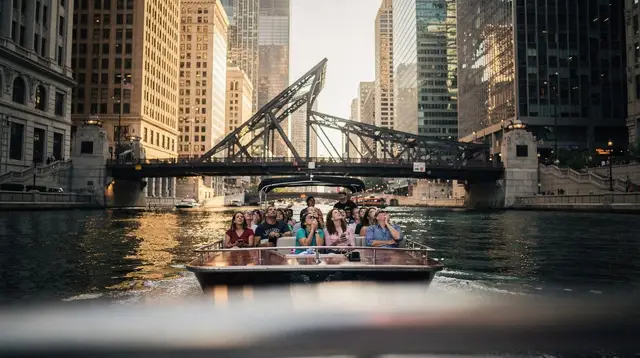
If you want context on the surrounding architecture before your Skydeck visit tomorrow, an architecture cruise along the Chicago River is worth booking for Day 2’s afternoon slot instead — boats vary in boarding accessibility, so confirm with the operator directly when reserving.
For background on the park and its surroundings, see the Chicago Loop walking tour guide and the Loop destination page.
Afternoon (1 p.m.–4 p.m.): Art Institute of Chicago
The Art Institute of Chicago, on Michigan Avenue at the edge of Grant Park, has accessible entrances and elevators connecting its floors. Admission is paid — expect on the order of USD 30 for an adult, though the museum’s own site (artic.edu) has the current rate and any local free-admission days, which change periodically.
Large temporary exhibitions can draw crowds that make galleries feel tight even with wide aisles, so an early-afternoon arrival, right after lunch, tends to be calmer than a mid-afternoon one. Budget at least two hours if you want to see both the permanent collection highlights and a special exhibition.
For a broader sense of what’s nearby, see the Museum Campus tours guide and the free and cheap things to do in Chicago guide — Millennium Park’s free admission pairs well with a paid museum afternoon if you’re managing a budget.
Day 2: Willis Tower Skydeck and the Riverwalk
Morning (10 a.m.–1 p.m.): Willis Tower Skydeck
The Skydeck, at 233 South Wacker Drive in the Willis Tower (the Loop; known as the Sears Tower until 2009), is reached by a direct elevator to the 103rd floor, and the deck itself is level with no stairs to the glass Ledge boxes. This is a different attraction from the 360 Chicago observation deck at 875 North Michigan Avenue on the Magnificent Mile — the two are run by separate companies more than 2 kilometers apart, and Skydeck tickets don’t apply at 360 Chicago or vice versa.
Contact Skydeck in advance (theskydeck.com) about accessible or priority entry procedures, since standard queue lines can be long and the process for wheelchair users may differ from posted general admission. Tickets run roughly USD 30–35 in standard tiers, more for expedited access, and rates shift by season — verify before you go.
Book the visit through a Skydeck admission ticket ahead of time to reduce time spent in line on arrival. For a side-by-side comparison with 360 Chicago’s TILT platform, see the Skydeck comparison guide and the Skydeck Willis Tower guide.
Afternoon (2 p.m.–5 p.m.): Chicago Riverwalk
The Chicago Riverwalk, along the south bank of the Chicago River through the Loop, is a level, paved promenade — one of the most consistently flat stretches downtown. A handful of ramp access points connect it to street level at different intersections, and they vary by segment, so it’s worth scouting the nearest ramp to your hotel before setting out.
This is also where most architecture river cruises depart. If you’d rather see the skyline from the water than only from the Riverwalk, an architecture-focused walking tour along the river is a level, boat-free alternative — confirm boarding ramps directly with any boat operator if you do choose a cruise, since gangway setups differ by vessel.
Details on the path itself, including where ramps connect to the street grid, are in the Chicago Riverwalk guide and the Riverwalk destination page.
Day 3: Museum Campus and the lakefront
Morning (10 a.m.–1 p.m.): Museum Campus
The Museum Campus, south of Grant Park, groups three separately ticketed institutions: the Field Museum, Shedd Aquarium, and Adler Planetarium. Rather than a Loop hotel walk, take an accessible CTA bus to the Museum Campus — it’s more reliable than assuming every L station en route has a working elevator, and it avoids a longer walk on mixed sidewalk terrain.
Pick one museum rather than three in a single morning. Shedd Aquarium is generally the easiest to recommend for wheelchair users, with wide, level viewing paths through its main galleries. Each museum sells tickets separately unless you’re using a combined pass, and each institution’s own site (fieldmuseum.org, sheddaquarium.org, adlerplanetarium.org) has current pricing, which varies by season and residency.
More on choosing among the three is in the family-friendly Museum Campus guide and the Shedd Aquarium guide.
Afternoon (2 p.m.–5 p.m.): Grant Park lakefront
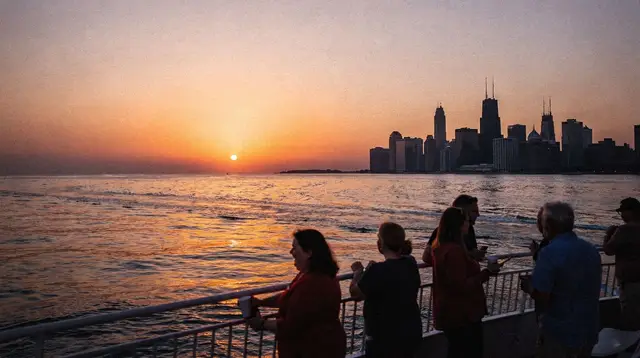
Finish at the lakefront along Grant Park, part of the roughly 30-kilometer Lakefront Trail. The paved path here has no notable grade, making it an easy, low-effort close to the day. If it’s between late May and early September, the nearby beaches are staffed with lifeguards; outside that window, swimming isn’t supervised, so treat the lakefront as a walk (or roll), not a swim stop.
If you’d like one more low-key activity, Navy Pier’s Centennial Wheel is a short bus ride north and sits on a flat pier — Navy Pier itself is free to enter, with individual attractions like the wheel ticketed separately.
For more on the lakefront and its seasonal rules, see the lakefront destination page and the Chicago summer lakefront guide.
What this itinerary leaves out
This plan deliberately skips a few common Chicago add-ons:
- Oak Park, Milwaukee, and Starved Rock — all three involve sidewalks, train platforms, or park trails whose wheelchair accessibility isn’t consistently documented, so they’re left for a separate trip once you’ve confirmed conditions directly.
- Blues and jazz clubs — much of Chicago’s live-music scene runs through older buildings without elevators or accessible restrooms; check with a specific venue before planning an evening around it.
- The L as a primary transit mode — used selectively here only at confirmed elevator-equipped stations; buses cover the same routes with less uncertainty.
For further planning, see the wheelchair-accessible Chicago tours guide, the getting around Chicago without a car guide, and the CTA L train guide.
Accessible Chicago itinerary: frequently asked questions
Is downtown Chicago wheelchair accessible?
The Loop, the Riverwalk, and the lakefront near Grant Park have flat, paved surfaces that work well for wheelchair users. Older sidewalks and curb cuts vary in quality block by block, so this itinerary sticks to routes that are consistently level.
Which CTA L stations have elevators?
Not all of them. The CTA publishes an accessible-stations list, and it changes as stations get retrofitted, so check it before each ride rather than assuming a station is equipped. Buses are a more reliable fallback since the whole fleet is wheelchair-equipped.
Is the Willis Tower Skydeck wheelchair accessible?
Yes. Visitors reach the 103rd floor by a direct elevator, and the deck itself is level. Contact Skydeck in advance about priority or accessible entry, since procedures can differ from the general admission line.
Is the Art Institute of Chicago accessible?
Yes, the museum has accessible entrances and elevators between floors. Large special exhibitions can still mean crowded galleries, so an early afternoon visit tends to be calmer.
Which Museum Campus museum is best for wheelchair users?
Shedd Aquarium is generally recommended for its wide, accessible viewing paths. Field Museum and Adler Planetarium are also accessible, but layouts and elevator locations differ, so this itinerary picks one to avoid rushing three museums in a single afternoon.
Does this itinerary cover Oak Park or Milwaukee?
No. Both day trips involve sidewalks, train platforms, or rural paths whose accessibility isn’t consistently documented, so they’re left out of this downtown-focused plan.
Is Chicago nightlife accessible?
Coverage is inconsistent. Many blues and jazz clubs occupy older buildings without elevators or accessible restrooms, so this itinerary doesn’t include evening club visits.
Tours for your first trip to Chicago on GetYourGuide
Verified deep-linked GetYourGuide tours. Book through these links and we earn a small commission at no cost to you.
GetYourGuide does not provide a product photo for this activity — the image shows the meeting point, photographed by us.