Lake Michigan cruise or river cruise: which one to book
Should I book a Chicago river cruise or a Lake Michigan cruise?
Book the river cruise for close-up architecture commentary between skyscrapers on the Chicago River; book the lake cruise for a wider skyline view from Lake Michigan's open water, with a bit more motion and a longer trip out and back.
River or lake: two different bodies of water, two different views
Visitors booking a Chicago boat tour often assume “river cruise” and “lake cruise” describe the same experience with different marketing names. They don’t. The Chicago River is a narrow channel that cuts straight through downtown, threading between skyscrapers close enough to read the stonework. Lake Michigan is a freshwater inland sea, one of the five Great Lakes, with no tide and no salt, stretching to a flat horizon east of the city. A boat on the river shows you architecture from underneath. A boat on the lake shows you the skyline from a distance, as one continuous wall of towers against the water.
Both routes usually depart from docks in or near the Loop or Navy Pier, and a few operators run a single itinerary that touches both the river and the open lake in one trip — see the narrated sightseeing river and lake cruise style of route below for that option. But most visitors are choosing between a dedicated river architecture cruise and a dedicated lake sightseeing cruise, and the right pick depends less on price than on what you actually want to see and how you handle open water.
This page is an arbitration, not a full review of either option. For the detailed rundown on each — boat types, exact routes, commentary style, best departure times — see the architecture river cruise guide and the Lake Michigan sightseeing cruise guide.
The geography, in plain terms
The Chicago River runs through downtown between Michigan Avenue and the West Loop, lined on both banks by the skyscrapers that made Chicago the birthplace of the modern high-rise. A river cruise moves slowly through this channel, passing under drawbridges, close enough that a guide can point at a single building’s cornice and name the architect. The water is calm because the river is sheltered by the buildings around it; wake from other boats is the main source of motion.
Lake Michigan sits east of downtown, beyond Navy Pier and the Museum Campus. It’s a genuine lake — freshwater, no tide, no salt — but it behaves like open water: wind builds real swells, especially in the afternoon, and a boat heading a mile or more offshore will roll more than anything on the river. In exchange, that distance is what lets a lake cruise frame the entire downtown skyline in one wide shot, towers and lakefront park together, which the river’s close-up angle physically cannot deliver.
| River cruise | Lake cruise | |
|---|---|---|
| Water type | Sheltered river channel | Open freshwater lake |
| Typical motion | Mild, steady | Noticeable chop possible, especially windy afternoons |
| View style | Close-up, building by building | Wide skyline panorama from offshore |
| Best for | Architecture detail | Overall skyline photos, open-air feel |
| Typical duration | Roughly 45 minutes to 1.5 hours | Similar or slightly longer, depending on operator |
| Departure points | Loop / Riverwalk docks | Navy Pier and lakefront docks |
Pick the river cruise if…
- You want architecture commentary: dates, architects, why a building’s facade looks the way it does. Chicago’s reputation as the cradle of the skyscraper — the legacy of Sullivan, Burnham and later Mies van der Rohe — is best explained from the river, where the buildings are close enough to actually see the details being described.
- You get seasick easily, or you’re traveling with someone who does. The river’s sheltered water is far more forgiving than open lake chop.
- You have limited time and want the single most efficient way to see a lot of Chicago’s built environment in under 90 minutes.
- You’re traveling in shoulder season (spring or fall) when lake wind is more likely to be uncomfortable but the river is still sheltered enough to run comfortably.
For the full route breakdown, boat operators and what the guides actually cover, read the architecture river cruise guide and, if you want to compare specific companies against each other, the architecture cruise companies compared page.
Pick the lake cruise if…
- You want the classic postcard shot: the full downtown skyline rising behind open water, which is only possible from a distance the river can’t provide.
- You’re not prone to motion sickness and don’t mind a bit of a rolling deck, particularly on a breezy afternoon.
- You’d rather have open air and a maritime feel than architecture lecture — some lake cruises run lighter, more scenic narration, and a few skip commentary altogether in favor of music or a bar service.
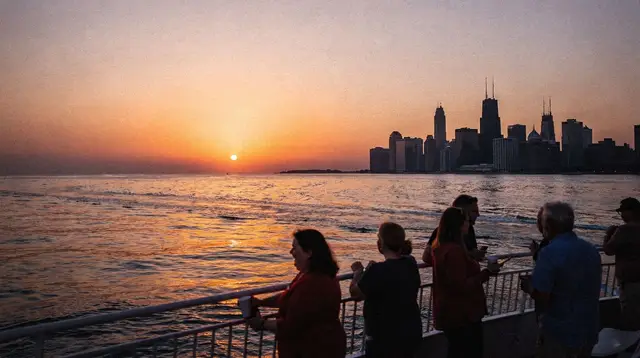
- You’re chasing sunset. A Lake Michigan sunset cruise puts the skyline in silhouette against the sky in a way the river, oriented east-west between buildings, generally can’t match at the same time of day. See also the general best sunset views roundup if you’re weighing rooftop bars and observation decks against a boat.
For the detail on lake-specific routes, boat sizes and what’s included, see the Lake Michigan sightseeing cruise guide.
Matching the choice to your trip
Short on time, first visit, want the highlight reel fast: the river cruise wins. It’s the single most efficient orientation to downtown Chicago’s history and layout, and it’s the activity locals recommend to first-time visitors more than almost anything else on this list. Combine it with a walk on the Riverwalk itself before or after.
Traveling with kids or older relatives who get queasy on boats: river cruise, without much debate. The calmer water matters more than the view once anyone on board starts feeling unwell.
Photographers chasing the full skyline in one frame: lake cruise. No river angle replicates the wide, offshore view of the whole downtown wall of towers.
Evening out, less interested in architecture lecture, more interested in atmosphere: either can work, but a lake-based evening cruise or a by-night river and lake cruise covers both waters in a single outing if your schedule allows the extra time.
Want a meal built in: several operators run dinner or brunch service on the lake rather than the river, since the wider lake boats have more room for a galley and dining deck.
If you genuinely can’t decide and have the time, some operators solve this by running one route that dips into the lake before or after the river — worth checking before booking two separate tickets. A narrated cruise covering both the river and Lake Michigan in one trip removes the choice entirely if your schedule allows an hour and a half or more.
Season and time of day change both rides
Chicago’s cruise season is shaped by the same climate that shapes everything else in the city. Summer days run warm and humid, typically in the mid-to-high 20s Celsius, which is exactly when both river and lake cruises are busiest and when lake chop tends to build in the afternoon as onshore wind picks up — a reason to favor a morning departure on Lake Michigan if you’re at all prone to motion sickness.
Spring arrives late and fall is often the calmer, more comfortable window for either cruise, with steadier air and fewer crowds than peak summer. Winter in Chicago turns cold and windy, hovering near freezing on an average day, and open-water lake sightseeing largely disappears from most operators’ schedules for the season while some sheltered river routes keep running later into the year — always confirm current-season availability directly with the operator rather than assuming either route runs year-round.
Time of day matters as much as season. Early departures on the lake are generally the calmest, since wind off Lake Michigan tends to build through the afternoon and can peak right around the same golden-hour window that photographers want for skyline shots — a trade-off worth knowing before you pick a sunset slot purely for the light. On the river, the sheltered channel keeps conditions fairly consistent from morning to evening, so time-of-day choice there is mostly about crowds and light rather than comfort.
Booking notes for either route
Ticket prices for both river and lake cruises in Chicago typically run in the range of $40 to $90 per adult depending on the operator, boat size, time of day and whether food or drink service is included; always check the operator’s own site for the current price, since rates shift by season. Prices shown at booking are generally the total charged, but always confirm whether tax is included before paying — Chicago’s sales tax runs around 10.25%, and it is common for that to be added on top of the ticket price quoted online rather than baked into the headline number. Evening and sunset departures on both water types tend to sell out first in summer, so booking a day or two ahead is reasonable during peak season (June through August).
Dress for wind regardless of which cruise you pick — even the sheltered river channel gets breezy once a boat is moving, and Chicago’s lakefront wind is real, not just a nickname for the city. A jacket that packs small is worth carrying even on a warm afternoon.
If you want a wider evening option, a nighttime cruise touring both the river and the lake after dark shows the skyline lit up from both angles in one outing. For a dedicated lake-only panorama in daylight, a skyline cruise on Lake Michigan’s shoreline keeps the trip focused on the wide view without the river’s stop-and-go bridge traffic. Visitors who want the deepest architectural detail without adding lake time should look at a 1.5-hour architecture cruise covering both the lake and the river, which runs longer than the standard river-only route and gives guides more time to cover buildings the shorter trips skip.
Where each cruise fits in a wider Chicago plan
Neither cruise needs to anchor a full day. A river cruise pairs naturally with a morning in the Loop — Millennium Park, the Art Institute, a walk along the Riverwalk — since the boat dock is a short walk from all three. A lake cruise pairs well with time at Navy Pier or the Museum Campus, both near lakefront departure points, or with an afternoon at the lakefront beaches in summer.
If you’re building a full day-one itinerary and trying to decide how a boat tour fits alongside observation decks and walking tours, the 3-day Chicago itinerary guide and the first-time visitor guide both slot a river cruise into a typical opening day. Comparing a boat tour against a hop-on hop-off bus or a self-guided walk is covered separately in the hop-on hop-off vs. walking tour page, in case a boat isn’t the right fit for your day at all.
Lake Michigan and river cruises: your questions answered
What is the main difference between the river cruise and the lake cruise?
The river cruise travels the Chicago River through the Loop and River North, passing directly beneath and beside skyscrapers, with narration focused on buildings and architects. The lake cruise heads out onto Lake Michigan, a freshwater lake with no tide, and views the skyline from a distance offshore instead of from inside it.
Which one is better for motion sickness?
The river is narrower and more sheltered, so the ride is steadier. Lake Michigan is open water and can have noticeable chop, especially on windy afternoons, so anyone prone to motion sickness should lean toward the river cruise or an early, calmer lake departure.
Is Lake Michigan salt water?
No. Lake Michigan is a freshwater lake, one of the five Great Lakes, with no tides and no salt. It can still feel maritime, with open horizon and swells on a windy day, but it is not the ocean.
Which cruise is more educational about Chicago’s architecture?
The river cruise, by a clear margin. Architecture-focused operators run trained volunteer or professional guides who narrate specific buildings, architects and dates. Lake cruises give general skyline orientation but rarely the same level of building-by-building detail.
Can I do both in one trip?
Yes, and many visitors do, usually on separate days or at different times of day, since a combined river-and-lake itinerary runs longer and costs more than either cruise alone. A few operators sell combined river-and-lake routes if time is tight.
Which is shorter, the river cruise or the lake cruise?
River architecture cruises typically run 45 minutes to 1.5 hours. Lake Michigan sightseeing cruises often run slightly longer once you count the time spent reaching open water from the dock, though exact durations vary by operator.
Does the lake cruise still show the skyline?
Yes, and for some visitors it shows the skyline better than the river, since the lake pulls back far enough to see the full wall of downtown towers against the water in one view, which the river’s close-up angle cannot do.
Where do these cruises depart from?
Most river and lake cruises depart from docks near the Loop, the Riverwalk, or Navy Pier. Confirm the exact dock on your ticket, since river-only and lake-capable boats often use different piers a short walk apart.
Does the season affect which cruise I should book?
Yes. Summer afternoons bring the most lake chop, so an early departure is calmer if you’re prone to motion sickness. Spring and fall tend to be steadier and less crowded on both routes. Winter is cold and windy in Chicago, and open-water lake sightseeing largely disappears from most operators’ schedules for the season, while some sheltered river routes keep running later into the year — confirm current availability with the operator directly.
Is Chicago sales tax added to cruise ticket prices?
Often, yes. Chicago’s sales tax runs around 10.25%, and it’s common for that to be added on top of the fare shown online rather than included in the headline price, so check the final total before paying.
Chicago tours worth comparing on GetYourGuide
Verified deep-linked GetYourGuide tours. Book through these links and we earn a small commission at no cost to you.
GetYourGuide does not provide a product photo for this activity — the image shows the meeting point, photographed by us.