Chicago deep dish pizza tours: comparing styles in one outing
What is a Chicago deep dish pizza tour, and is it worth doing?
It's a guided outing that stops at several pizzerias for tasting-size portions of deep dish and related styles in one session, instead of one full pie at one restaurant. It suits visitors who want to compare styles quickly and don't mind moderate walking between stops; it's a poor fit if you'd rather sit down and eat a whole pizza at your own pace.
Why do this as a tour instead of one meal
Deep dish pizza is the dish most visitors associate with Chicago before they ever arrive, and that reputation creates a real planning problem: with a limited number of meals on a short trip, how do you actually compare styles instead of gambling on one restaurant and hoping it’s representative? A guided deep dish pizza tour solves that by stopping at several pizzerias for tasting-size portions in a single outing, rather than committing your one pizza dinner to a single kitchen.
This is different from sitting down at one restaurant for a full pie, and it’s different again from the hands-on pizza-making class covered in a separate guide, where you build and bake the pizza yourself rather than sampling what a kitchen already makes. If you want the skill of assembling a deep dish pie to take home, that class is the better fit. If you want to taste and compare what several respected kitchens actually produce in one afternoon or evening, a tasting tour is built for that.
This guide covers the food and the format only: what makes deep dish what it is, what to expect logistically, and how to decide if the tasting-tour format suits your appetite and your feet. It does not rank pizzerias or claim a single “best” deep dish in Chicago — that’s a genuinely contested local opinion, not a fact a guide can settle.
What deep dish pizza actually is
Deep dish is baked in a round, straight-sided steel pan, typically 2 to 3 inches deep, and that pan is what defines the style: it produces a thick, high-rimmed crust that’s closer to a savory pie than to a folded slice. The construction is also inverted compared to most pizza: cheese goes down directly on the dough, then toppings, with chunky tomato sauce ladled over the top layer rather than spread underneath the cheese. Because the pan holds so much more filling than a flat pie, deep dish takes noticeably longer to bake, often 30 to 45 minutes depending on the kitchen, which is why sit-down deep dish restaurants sometimes ask you to order early.
None of this means deep dish is the only pizza Chicago is known for, or even the one locals eat most often. Tavern-style pizza — thin, cracker-crisp, cut into small squares rather than wedges (sometimes called a “party cut”) — is arguably more common in everyday Chicago pizzerias, and it’s worth knowing the term exists so you’re not confused when a menu or a local mentions it. A well-built tasting tour sometimes includes a tavern-style stop specifically to make that contrast clear, since the two styles get compared constantly and taste almost nothing alike beyond both being called pizza.
What this guide deliberately avoids is a claim about who invented deep dish or which restaurant did it first. That origin story is disputed even among Chicagoans, and a guide can’t respect a request for factual honesty while also repeating an unverified founding legend as settled history. Treat any origin claim you hear on a tour as color commentary, not verified fact.
What a tasting-format tour actually looks like
The tasting-tour format exists because a full deep dish pizza is a substantial, filling meal on its own — most people cannot reasonably eat three or four full pies in one outing. Tour operators instead serve smaller tasting portions at each stop, which is what makes comparing several kitchens physically possible in one session. A typical route runs somewhere between three and six stops, mixing deep dish with occasionally a tavern-style comparison, and sometimes another Chicago food entirely if the tour isn’t pizza-exclusive.
A few practical points worth knowing before you book:
- Come hungry, but expect small plates, not full pies. Tasting portions are sized to let you finish several stops without stopping early, but the cumulative volume across a multi-stop tour still adds up. Skipping a heavy breakfast or lunch beforehand is a common and sensible recommendation, rather than treating the tour as a light snack you can fit in after a full meal.
- Expect moderate walking between stops. Tours move on foot between pizzerias, typically covering several blocks each way depending on the neighborhood and route. This isn’t a strenuous hike, but it’s also not a seated, single-location meal — wear shoes you’re comfortable walking in, not what you’d wear to a sit-down dinner.
- A guide usually narrates neighborhood and food context along the way, which is part of the value: you’re not just eating, you’re getting a walking introduction to whichever part of the city the route covers between bites.
- Group size and pace vary by operator. Some tours run as larger group walks, others keep groups small; if pace or group size matters to you, check the specific listing before booking rather than assuming.
Because deep dish tasting tours run outdoors between stops, the season affects how comfortable that stretch of walking feels. Chicago’s summers run warm and humid by afternoon, which is manageable for a few blocks between pizzerias but worth dressing for. Winters are a different story — cold and often windy, with daytime temperatures frequently sitting around freezing in the depths of the season — so a tour booked in December or January calls for a warm coat, not just comfortable shoes. Spring arrives late in Chicago, and fall is often considered the most comfortable stretch for an outdoor food tour, a pattern covered in more detail in the best time to visit Chicago guide if you’re still choosing travel dates around more than just pizza.
Getting to your tour without a car
Most deep dish tasting tours meet downtown, in or near the Loop, which is the easiest part of Chicago to reach without a car. The CTA’s elevated train system, known locally as the “L,” connects both airports to downtown: the Blue Line runs from O’Hare in roughly 40 to 45 minutes, and the Orange Line runs from Midway in roughly 25 to 30 minutes, both landing within walking distance of most downtown meeting points. A Ventra card covers fares on the L, and it’s worth picking one up before your first ride rather than figuring out payment at the meeting point with a tour start time approaching.
Only the Red Line and the Blue Line run around the clock; every other line, including the Orange Line from Midway, stops overnight, which matters if your tour ends late and you’re planning your ride back by train. For a fuller rundown of getting around without renting a car, including how the L compares to other options for short downtown hops, see the getting around Chicago without a car guide and the dedicated CTA L train guide.
Comparing the tasting-tour format to the alternatives
| Format | What you get | Best for |
|---|---|---|
| Guided tasting tour (this guide) | Small portions at several pizzerias in one outing, plus neighborhood narration | Comparing styles quickly, limited time in the city |
| Single sit-down deep dish meal | One full pie at one restaurant, at your own pace | A relaxed dinner, no interest in comparing |
| Hands-on pizza-making class | You assemble and bake your own deep dish pizza, with instruction | Wanting the skill and the experience of making it, not just eating it |
| Broader food tour with pizza as one stop | Deep dish alongside other Chicago foods (Italian beef, hot dogs, etc.) | Visitors who want variety beyond pizza specifically |
If the hands-on angle appeals to you more than the tasting-and-comparing angle, the deep dish pizza-making class is the better booking — it’s covered in full detail there rather than here, since the two experiences serve different goals and shouldn’t be conflated. For a broader look at Chicago food touring beyond pizza specifically, the Chicago food tours guide rounds up other formats, including tours built around Chinatown and the Fulton Market food and drink scene.
Booking a deep dish tasting tour
a Loop-based food tour built around six tastings that includes deep dish pizza alongside other stops is one straightforward way to combine the pizza-tasting format with a broader look at downtown food in a single outing. It runs through the Loop, so it pairs naturally with a day that also touches the Loop’s architecture and skyscrapers.
For a tour built specifically around pizza rather than a mixed food lineup, a downtown-focused pizza tasting tour keeps the comparison narrower and more pizza-forward, which suits visitors who came to Chicago specifically for the deep dish question and don’t need other cuisines mixed in.
If you’d rather widen the food comparison beyond pizza on the same trip, a guided tasting walk through Chinatown gives a contrasting food neighborhood on a separate outing, useful if you’re building a multi-day food itinerary rather than a single pizza-focused afternoon.
Whichever tour you pick, confirm the current price, the number of stops, and whether drinks are included before booking — tasting-tour pricing and stop lists change by operator and season, and no fixed figure here should be treated as current.
Pairing the tour with the rest of the Loop
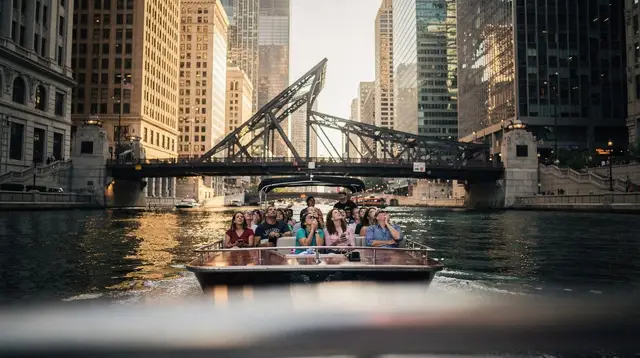
Because most pizza tasting tours run through or near the Loop, the same outing is a natural excuse to build in some of downtown’s other landmarks rather than treating the tour as a standalone errand. The Loop is home to the Riverwalk, the Willis Tower, and Millennium Park with its Cloud Gate sculpture, all within a short walk of typical tour meeting points. If you’d rather see the neighborhood’s architecture guided rather than on your own, before or after eating, a guided walking tour of the Loop’s most iconic buildings gives a structured way to see the Loop’s landmarks, either before your tasting tour builds an appetite or afterward as a way to walk off a multi-stop pizza crawl.
And if a slower, self-directed stroll appeals more than a second guided experience, the Chicago Riverwalk itself is free to walk anytime, and the Riverwalk guide covers where to enter and what’s along the water. Millennium Park and the Cloud Gate sculpture are free to visit as well, and sit close enough to most Loop meeting points to fit in before or after a tour without adding much extra walking on top of what the tasting tour itself already covers. The Art Institute of Chicago, by contrast, charges admission, so budget separately for it if you want to combine a pizza crawl with a museum visit on the same downtown day.
Building this into a wider Chicago trip
A deep dish tasting tour works well as one afternoon or evening slot inside a longer stay rather than the entire point of a visit. If you’re planning a food-focused day, the food-and-neighborhood itinerary covering Chinatown, Pilsen, and Fulton Market gives a structure for stacking multiple food experiences across one day without repeating cuisines. For first-time visitors still building out a full schedule, the first-time visitor guide helps place a food tour alongside the sightseeing staples.
If cocktails or a nightcap after the tour interest you, the craft cocktail bars guide lists options near the Loop and downtown, convenient if your tasting tour ends in the evening rather than at midday. And for a sense of how food spending fits into an overall trip budget, the real cost of a week in Chicago breaks down where food tours and meals typically land relative to lodging and attractions.
Deep dish versus tavern-style is also a genuinely useful debate to understand before you tour, not just a curiosity — it explains why locals react differently to the word “pizza” than most visitors expect. The deep dish versus tavern-style breakdown goes deeper into that distinction if a tasting tour leaves you wanting to understand the local pizza culture rather than just the one dish you came for.
A note on neighborhoods and where tours run
Most deep dish tasting tours are based downtown, running through the Loop or nearby, which keeps the walking distances between stops manageable and puts the tour within reach of most downtown hotels. Some broader food tours extend into neighborhoods further out, including stops connected to the Hyde Park and South Side food scene, though pizza-specific tasting tours are more commonly clustered downtown. If your hotel is outside the Loop, check the tour’s meeting point before booking so you’re not adding an unplanned commute on top of the walking the tour itself involves.
For a category-level view of what else counts as a food and drink tour in Chicago beyond pizza specifically — cooking classes, cocktail tours, and neighborhood food walks — the food and drink tours category page is the right jumping-off point, and the general things to do in Chicago hub covers everything else on offer if pizza turns out to be just one piece of your planning.
The honest bottom line
A deep dish tasting tour is a genuinely efficient way to compare Chicago’s most famous food export without committing a full meal, or a full day, to a single restaurant gamble. It suits visitors who specifically came for the pizza question, are comfortable with moderate walking between stops, and would rather taste several styles than eat one full pie somewhere they picked at random. It’s a poor fit if you’d rather sit down, order a whole pizza, and eat at your own pace without a guide moving the group along — in that case, skip the tour and just pick one well-reviewed deep dish restaurant instead. And if what you actually want is to learn to make the pizza yourself rather than taste what a kitchen already made, book the pizza-making class instead of a tasting tour built around eating, not cooking.
Food and drink tours on GetYourGuide
Verified deep-linked GetYourGuide tours. Book through these links and we earn a small commission at no cost to you.
GetYourGuide does not provide a product photo for this activity — the image shows the meeting point, photographed by us.