Chicago theater and musicals guide
Where is Chicago's theater district and is it worth a night out?
Most large commercial theaters sit in and around the Loop, within walking distance of Michigan Avenue and State Street. Chicago is regularly ranked as the second-strongest theater city in the United States after New York, with a mix of touring musicals, long-running productions, and serious non-musical drama.
A theater town that rarely gets the credit it deserves
Ask most first-time visitors what Chicago is known for and the answer tends to be deep-dish pizza, the Bean, or gangster history. Theater rarely makes the list, which is a genuine oversight. Chicago has one of the largest and most active professional theater scenes in the United States, and it’s routinely cited in the trade press as the country’s strongest theater city after New York — a reputation built on decades of home-grown drama companies, a steady stream of touring Broadway musicals, and productions that have transferred from Chicago stages to Broadway and back again.
This guide is about that scene specifically: the commercial and non-profit theaters that stage plays and musicals, concentrated in and around the Loop. It’s a different circuit from Chicago’s well-known comedy and improv houses — covered in our separate comedy shows guide — and from the city’s live music venues, which have their own guide. If you’re picturing sketch comedy or a blues club, you want one of those two instead. If you’re picturing a scripted play or a big touring musical with an orchestra pit, you’re in the right place.
One honest caveat before anything else: this guide will not tell you what’s currently playing. Touring musicals move through Chicago on limited engagements, open-ended runs close without much warning, and non-profit companies program their seasons a year or more ahead but can still swap titles. Anything printed here as a specific show title would likely be wrong by the time you read it. Instead, this guide explains where to look, what to expect to pay, and how to plan an evening around a show — you supply the title by checking the venue directly closer to your travel dates.
Where Chicago theater actually happens
The historic core of Chicago theater is the Loop’s theater district, roughly the blocks around State Street, Randolph Street, and Dearborn Street. Several large, ornately restored early-20th-century theaters here were built as movie palaces or vaudeville houses and later converted to legitimate stage use; they now host touring Broadway productions and big commercial musicals. Walking between them takes minutes, and the district sits within easy reach of Millennium Park, the Art Institute of Chicago, and the Chicago Riverwalk, which makes it easy to build a full day around an evening performance.
Beyond the Loop, Chicago’s non-profit and resident theater companies are scattered across the North Side and elsewhere in the city. These smaller houses tend to stage original productions, contemporary drama, and revivals rather than touring musicals, and several have won national recognition and sent productions to Broadway. They’re a different experience from a big commercial musical: smaller rooms, closer seating, and often more adventurous programming — worth seeking out if you want something beyond a familiar title. If you’re already spending an evening in neighborhoods like Lincoln Park and Old Town, checking what a local company has on that week can be a natural add-on rather than a special trip.
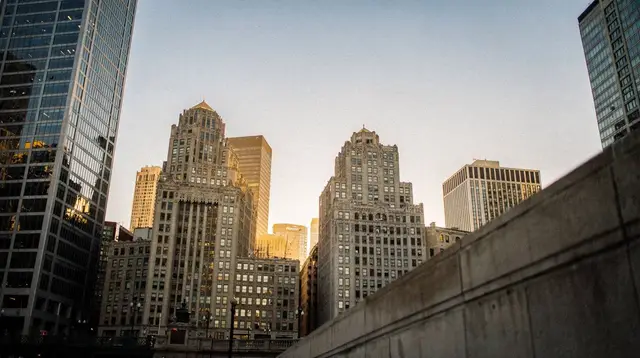
The Loop’s big theater buildings are worth a second look even if you never buy a ticket. Many were built during Chicago’s early skyscraper era, when architects associated with what’s now called the Chicago School were reshaping the city’s downtown after the Great Chicago Fire of 1871 forced a near-total rebuild. The ornate lobbies and auditoriums that survive from that period and the vaudeville era after it are part of the same architectural story covered in our architecture river cruise guide and our Loop walking tour guide — both good ways to spend the daylight hours before an evening curtain.
| District | What you’ll typically find | Distance from downtown |
|---|---|---|
| Loop theater district | Large touring musicals, restored historic theaters | In the Loop itself |
| North Side companies | Non-profit drama, original works, smaller houses | 15–30 minutes by the L |
| Occasional pop-up or limited runs | Immersive or site-specific shows, variable location | Varies |
What to expect to pay
Prices vary enormously by production, seat location, and how far ahead you book, so treat the following as rough orders of magnitude rather than a quote. A ticket to a smaller non-profit production typically runs somewhere in the 30 to 60 USD range. A major touring musical in the Loop more commonly runs 60 to 150 USD for a standard seat, with premium or front-section seating for a popular run pushing well past that. All of these figures are before the roughly 10.25% sales tax added at checkout in Chicago, and before any online booking fee the theater or ticketing platform adds separately — always check the total at the payment screen rather than the headline price.
Matinee performances, weeknight shows, and rush or lottery tickets (where a theater releases a small number of discounted seats shortly before curtain) can bring the cost down meaningfully if your schedule allows flexibility. These programs vary by theater and by production, so check the specific venue’s website for what’s currently offered rather than assuming a standard policy across the district.
If you’re staying at a downtown hotel to be close to the theater district, remember that Chicago’s hotel tax stacks on top of the room rate at a rate among the highest of any major U.S. city — worth checking at booking rather than being surprised at checkout, especially if you’re already budgeting carefully for theater tickets on the same trip. A tip in the 18 to 22% range is standard if your evening includes a sit-down restaurant meal before or after the show, on top of the sales tax already added to the check.
How to plan the evening, not just the ticket
A theater night in the Loop works well built around dinner. The neighborhood has restaurants at every price point within a short walk of the main theaters, and several operators sell a combined dinner-and-show package that bundles a fixed-price meal with your ticket — useful if you’d rather not scramble for a table right before curtain. Our dinner and a show guide covers how to time that pairing so you’re not rushing dessert to make the opening number.
Getting there is straightforward from most parts of the city: the L serves the Loop directly on multiple lines, and it’s a walkable district once you arrive, so a car is rarely necessary and parking downtown is expensive regardless. If you’re staying near Michigan Avenue or in River North, the Loop’s theaters are typically a 10- to 20-minute walk.
For a lighter, more playful evening that isn’t traditional theater but sits in the same broad “live entertainment” category, Chicago also has interactive and puzzle-style experiences in and around downtown — an escape-room-style hunt through Loop landmarks, or an immersive game space, both aimed at small groups rather than a seated audience. Neither replaces a proper theater night, but they’re a good option for an evening when the current stage lineup doesn’t line up with your dates or your group’s taste. A guided Chicago Loop murder mystery hunt turns a walk through the district into a puzzle-solving evening, while the immersive Cube game experience is a fixed indoor alternative if the weather turns.
If you’d rather understand the district’s architecture and history than book a seat at all, a guided tour of the historic Chicago Theatre covers the building’s ornate interior and its role in the city’s entertainment history without requiring you to sit through a full performance — a reasonable option on a daytime schedule or for visitors more interested in the building than a specific show.
Chicago’s place in American theater
The comparison to New York comes up constantly, and it’s worth explaining rather than repeating as a slogan. Chicago has more resident professional theater companies than almost any other American city, a deep bench of playwrights, directors, and actors who work here year-round rather than only passing through, and a long track record of productions that started in Chicago, built an audience, and then moved to Broadway. Several nationally known theater artists built their early careers on Chicago stages before working in New York or in film and television. That pipeline, combined with the sheer number of active stages, is generally what critics mean when they rank Chicago second after New York — it’s a statement about depth and volume of professional theater activity, not a claim that the two cities’ commercial theater industries are the same size.
For a visitor, the practical upshot is that a Chicago theater night is a legitimate, high-quality option rather than a consolation prize for missing Broadway. Touring productions of major musicals routinely make an extended stop in the Loop, and the city’s own companies stage work that later ends up in New York rather than the reverse.
Theater in each season
A theater night works differently depending on when you visit. In winter, when outdoor activities are limited and the wind off Lake Michigan makes evening walks less appealing, an indoor evening at a Loop theater is one of the better cold-weather options in the city, and the holiday season in particular brings family-oriented productions timed to school breaks — see our Christmas and holiday guide for how that season’s programming tends to run. In summer, when the lakefront and its beaches are the bigger draw during the day, an evening show is a natural way to close out a day spent outdoors without needing a car or a long commute back downtown. Spring and fall bookings tend to be steadier and less tied to a specific seasonal theme, which can also mean more availability if your dates are flexible.
Getting to the theater district
Most visitors reach the Loop by the L rather than by car, and that’s worth planning around if you’re flying in specifically for a show. From O’Hare, the Blue Line runs directly to the Loop, a ride of roughly 40 to 45 minutes; from Midway, the Orange Line covers the shorter run downtown in roughly 25 to 30 minutes. Neither line runs 24 hours a day — only the Red Line and Blue Line do — so if your show lets out very late and you’re connecting to the Orange Line or another branch, check the schedule rather than assuming a train will be waiting. A Ventra card covers fare on either line and is the simplest way to pay without fumbling for cash at the platform.
If you or someone in your group needs step-free access or other accommodations, most of the Loop’s major theaters publish accessibility information for seating, restrooms, and entry on their own sites, and it’s worth confirming directly with the venue rather than assuming a historic building has been fully retrofitted. Our wheelchair-accessible touring guide covers the same question for daytime sightseeing if accessibility is a planning priority across your whole trip, not just the evening.
Family shows versus adult programming
Not every Chicago theater production suits every age group. Certain touring musicals and holiday-season productions are explicitly marketed as family entertainment, with content and runtime aimed at children, while other dramatic and musical productions carry mature themes, strong language, or adult content that theaters flag clearly in their marketing and ticketing pages. If you’re traveling with children, check the specific production’s age guidance before booking — it varies by show and isn’t standardized across the district. If your trip includes children more broadly and you want a wider view of what else works for families in Chicago, see our family guide to the city.
A short, honest planning checklist
- Don’t plan your trip dates around a specific show title found anywhere online, including this guide — check the theater’s own website within a few weeks of travel, since runs open and close on their own schedule.
- Book tickets directly through the theater or a recognized ticketing platform, not through a third-party reseller advertising “sold out” seats at inflated prices, which is a common trap in this district as in any theater district.
- Budget for sales tax on top of the ticket price, and confirm any additional booking fee before you complete checkout.
- If you’re combining a show with dinner, reserve the restaurant first — theater-district restaurants fill up fast on performance nights, especially Friday and Saturday.
- Arrive with time to spare. The historic Loop theaters weren’t built with modern crowd flow in mind, and coat check and restroom lines before curtain can be longer than expected.
- If your interest is architecture and history rather than a live performance, a daytime tour of a historic theater building is a reasonable substitute and doesn’t depend on the current schedule at all.
Theater and musicals in Chicago: common questions
Is Chicago’s theater scene the same as its comedy and improv scene?
No. Comedy clubs and improv houses, covered separately in our comedy guide, are a distinct circuit from the Loop’s commercial and non-profit theaters, which stage musicals and dramatic plays rather than sketch or improv sets.
Can this guide tell me what musical is playing when I visit?
No. Touring productions and open-ended runs change constantly and are never guaranteed months in advance, so this guide covers the theaters, districts, and booking logistics rather than naming a specific show.
Where should I check for the current schedule before booking?
Check the official website of the specific theater you’re interested in, or a citywide listings site, in the weeks before your trip. Programming confirmed today can close or change before you arrive.
What does a Chicago theater ticket cost?
Expect roughly 30 to 60 USD for a smaller non-profit production and 60 to 150 USD or more for a major touring musical, before fees and before the roughly 10.25% sales tax; front-row or premium seating for a hit run can go well beyond that.
Is Chicago theater considered second only to New York?
It’s a common ranking in the American theater press, based on the sheer volume of professional stages, touring bookings, and Tony-winning transfers that originate or land in Chicago, though the two scenes aren’t directly comparable in scale.
Are Chicago theaters family-friendly?
Some productions, particularly certain touring musicals, are marketed as family shows, while others carry mature content advisories. Check the age guidance on the specific production’s page before booking for children.
Can I combine a show with dinner?
Yes. Several venues and neighborhoods pair naturally with a pre-show meal, and our dinner and a show guide covers how to time that combination without rushing either half of the evening.
Is live music at a blues or jazz club the same thing as theater?
No. Live music venues are a separate category from scripted theater and musicals; see our live music venues guide if that’s what you’re after.
Shows, comedy and live music venues in Chicago on GetYourGuide
Verified deep-linked GetYourGuide tours. Book through these links and we earn a small commission at no cost to you.
GetYourGuide does not provide a product photo for this activity — the image shows the meeting point, photographed by us.